
“Wayward, vain, greedy, shallow, sly, cowardly, malignant”: Walt Whitman saw Trump Coming
Nor is it you alone who know what it is to be evil, I am he who knew what it was to be evil… blabb’d, blush’d, resented, lied, stole, grudg’d,
Had guile, anger, lust, hot wishes I dared not speak,
Was wayward, vain, greedy, shallow, sly, cowardly, malignant,
The wolf, the snake, the hog, not wanting in me,
The cheating look, the frivolous word, the adulterous wish, not wanting,
Refusals, hates, postponements, meanness, laziness, none of these wanting…
Walt Whitman, from "Crossing Brooklyn Ferry,," 1856, (As read, with some paraphrase, by Ed Norton on a farewell visit to Stephen Colbert’s "The Late Show" on March 18, 2026
TO venture into Donald J. Trump’s command of U.S. miliary history is to at once descend into farce.
To examine his stewardship of our fate, and that of the entrie Middle East, summons visions of a much darker farce, as will be cited below.
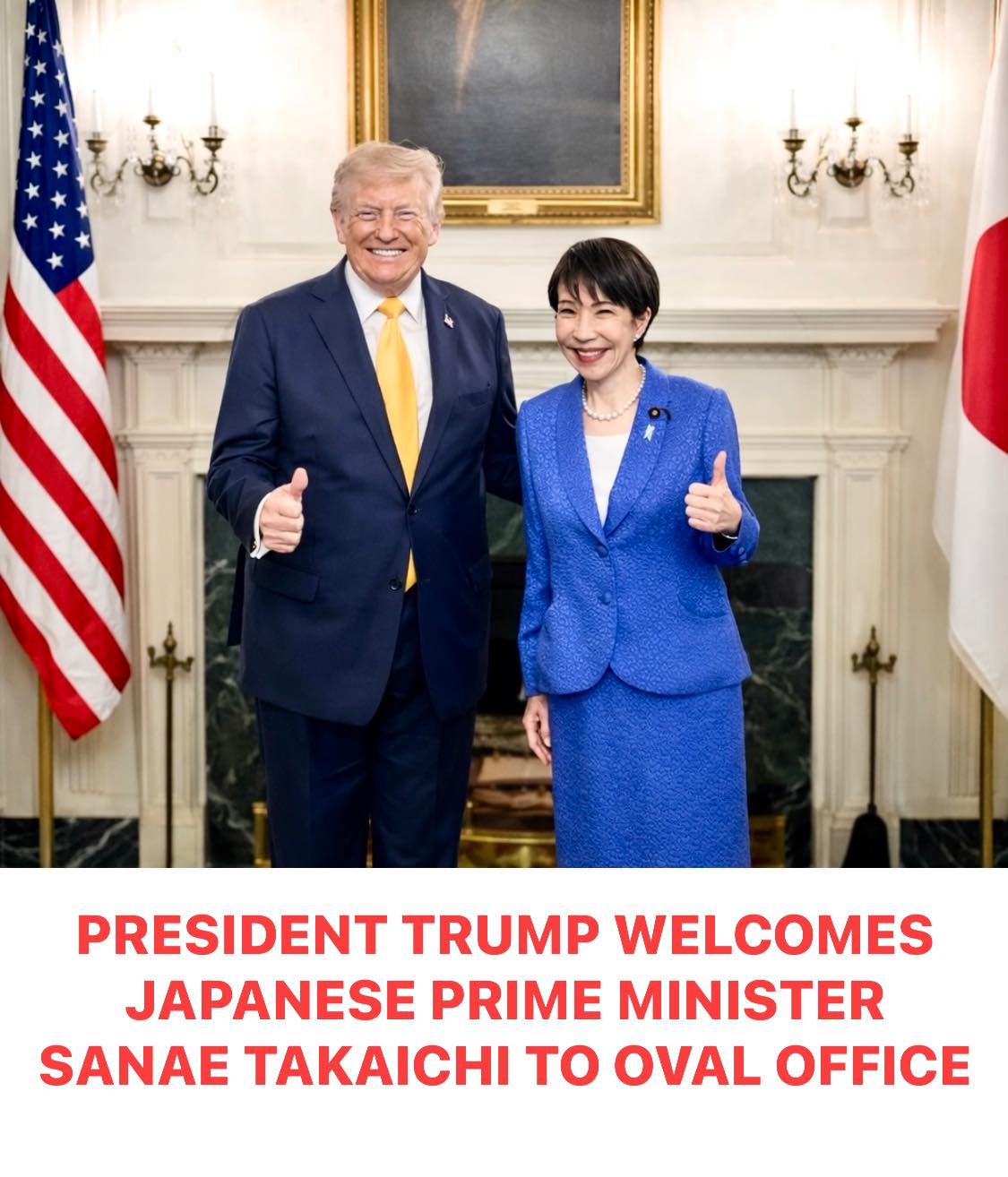
But sticking with the lighter side for now, his stupidly smirking attempt at banter with Japanese Prime Minister Sanae Takaichi—“Why didn’t you tell me about Pearl Harbor?”—well captures the obtuseness of the middle-school bully he was and is.
Whitman’s poem excerpted above, and augmented by the great poet’s epochal “Song of Myself,” was an everyman’s tribute to his own —and our own—universal flaws. But somehow across his two administrations Trump has come to publicly embody all the worst of the listed attributes. Norton read it like a sacred vow, at one point saying "eases" twice in a row for effect, knuckles clenched.
If you’ve been following Trump since his 2017 initial presidential trip to Asia, you recall his apparent mystification as to the Pearl Harbor monument that memorializes the infamous raid, even as it rests above the sunken, watery grave that was the USS Arizona. (It's a site long ranked as sacred, alongside the sites of Gettysburg, the Alamo, and September 11.) In their book A Very Stable Genius , two Washington Post Pulitzer Prize winners depicted Trump on that day asking accompanying General John Kelly “Hey, John, what’s this all about? What’s this a tour of?”
Feasibly the first part of Trump’s puling query this week--"Who knows better about surprise than Japan?”—might have served a different role, as a reference to the atomic bombs that devastated Hiroshima and Nagasaki, killing some 150,000 Japanese. (He did compare the June 2025 "Midnight Hammer" bombing strikes on Iran to the finality --“That ended the war”)– of the 1945 bombings:
https://www.youtube.com/watch?v=QI1fJT9wW3o
This is the man who just sent a flotilla of Marines to the war zone, with an equal force said to be added in shortly. Who here is ready to put their son or daughter at his service and shipped off to the darkly looming next edition of our Forever Wars in the sandbox?
On his way to thoroughly giving the lie to his key campaign promises, Trump has engendered a new era of Russian hegemony in the region. Putin has eagerly been fattening up the Kremlin’s treasury with oil and gas sales hugely plumped up by Trump’s removal of sanctions on them; a corollary is Russia gaining power in their aggressions against a Ukraine Trump has grievously under-supported.
The fallout among our NATO allies has also called into question the good will of Europe–notably Denmark as it spat back at Trump’s notion to perhaps occupy Greenland.. Trump has put a considerable piece of America’s self-defense capabilities into a state of wary withdrawal.
The Republican legislators have been cowardly (a word Trump throws at our actual allies) and mostly hidden in the weeds on all this—part of what Georgia Senator from Georgia Jon Osoff calls the party loyalists’ “`Dear Leader’ problem”, as epitomized by Tulsi Gabbard’s obtuse non-replies as to how Trump dictates kinetic chaos regardless of what was once called intelligence.
Trump and his reptilian `Department of War’ chief, Pissed-Off Pete Hegseth have been congratulating themselves on the Epic Fury fireworks for nigh to three weeks now, and indeed, who can stand so much winning?
In what sequence do we celebrate it all?
Is it first of all the re-obliteration of the previously ever-so-obliterated-like-nobody-has-ever-seen nuclear weapons refinement?
Or the disabling of ship traffic in the Strait of Hormuz with the attendant interruption of fuel and fertilizer, bidding to immobilize and bankrupt multiple economies?
Or maybe it's the subjecting of previously friendly Middle Eastern trade partners to the Iranian payback of Gulf states shelling and economic dismemberment?
Hmmm…the credible-to-many accusations that Bibi Netanyahu is jerking Trump into action while spreading death and black plumes of smoke to whatever prized enemies now somehow feel justifiable as targets?
The most horrible part of the horrible joke on his voters has to be the Dignified Transfers, two of which he’s handled rather than lateral that work to V.P. J.D. Vance, who still dreams of sliding past blast radius of suckered-MAGA types. He's so far ducked a verbal spanking from the likes of antri-excursionist Megan Kelly on her Sirius channel. Former fellow Fox talking head Mark Levin described Kelly as an “emotionally unhinged, lewd, and petulant wreck”, drawing return fire in the form of her citing his “micropenis”.
Just while we’re at it, you schismatic MAGA people, will Ice Barbie be assessing Corey Lewandowski’s Deep Penetrator credentials as deployed on the Ice-Fuck One jet? I’ve been waiting to know more since the days when Trump himself, as alleged in Michael Woolf’s Fire and Fury, advised former White House staffer Hope Hicks she was “the best piece of tail he’ll ever have.” Even now Lewandoski’s latest grift is being revealed, even though he’s just making couch change compared to presidential son-in-law Jared Kushner’s money-grab diplomacy.)
Even as I add, “Stay classy, Donald,” genuine regret intrudes at how the aforementioned farcical elements fly in on the wings of sordid gossip. Most of his haters--he made them that--are being joined by more than a few of his MAGA base. Plenty of them find the cases belli to be the President’s need for a whopping distraction from.the Epstein inquiries.
Can we at least name-check Cuba, that unfortunate island that Trump probably feels was best run by the repressive and corrupt Batista? Thanks to its similaries with the ransacked-and dumped Venezuela, it’s at present being quite literally disempowered, left in the darkness of an increasingly impoverished (read: starving) population who already had enough problems. Perhaps an easy target to pivot to when the black smoke blots out the sky over the Strait.
I journeyed to Cuba in the late 1990s, where I found the citizens full of grace and displaying a hard-earned dignity that hid out in their bitter whispered jokes about life under Castro; This was well before the current U.S. clampdown, and life was tough enough to gin up the the go-to saw about life in a struggling Communist state where “The three major failures of the revolution were breakfast, lunch, and dinner."
“I do believe,” Trump said, gloating in his own sense of imperial majesty, “I'll be having the honor of taking Cuba. That'd be a good honor, that's a big honor…. I mean, whether I free it, take it, think I could do anything I want with it…you want to know the truth…a beautiful island, great weather. They're not in a hurricane zone, which is nice for a change. They won't be asking us for money for hurricanes every week.”
Well, there’s that. After all, we have our own violent storms up here in El Norte, as the executive orders pile up and impel us to global warming.
In sum, the thuggery from Trump knows no bounds, it seems, nor any scrap of empathy, nor an explicable plan.
Which returns us to Iran.
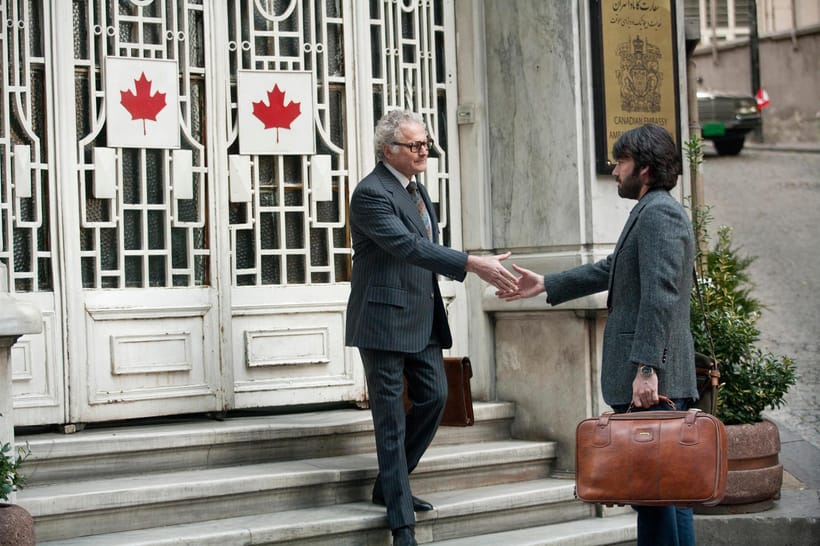
It requires some strain to think back through the current waves of Hollywood sequel/prequelitis to recall the 2012 release Argo, which won Best Picture and Best Adapted Screenplay, along with Best Supporting actor for Alan Arkin and four other noms.
A quirk of working as a freelance across decades was that in 1983 I first wrote about much-lauded Ken Taylor, who as Canadian ambassador to Iran during the crisis sheltered endangered U.S. embassy personnel, and then three decades later interviewed Chris Terrio, the deft screenwriter whose script put Ben Affleck more prominently in the hero’s role as real-life CIA operative Tony Mendez. (Though it was Arkin’s portrayal of a fictionalized producer Lester Siegel that gave the story buoyancy as also being a profanity-rich Hollywood satire:
As you could glimpse from the snark that Trump recently dropped on Carter’s management of the 1979-81 hostage crisis in Iran, the wound that still informs Pentagon thinking about certain species of international hostage rescue was Eagle Claw, often tagged as Desert One after the site in the Iranian desert where a special operations rescue effort things fell apart with nine service personnel dying.
In the story I wrote for the Los Angeles Times Calendar section (link at bottom), the framing was this: Terrio, over coffee, finds that, despite the passage of more than two decades since the drama in Iran, there are messages relevant to our media-centric world: “The hostage crisis was the first big world event in which media was used in this way — that’s something the students, the hostage takers, the Iranian government and particularly the ayatollah certainly understood. He was a master of manipulating his image and his message to the world. That interview he did with Mike Wallace that you see in the film was no accident. He’s thought of sometimes as being stuck in some medieval paradigm. But it’s clear that this is a man who was quite savvy about how to manipulate world opinion to bolster his power.
It’s probably already too late to get a decent Polymarket pick down as to whether Trump or the wounded but grinding new Ayatollah is coming out on top in the conflict’s propaganda war. But current indications are prettydire, PR-wise.
To give the showbiz side of all this a further look, Terrio’s path through Hollywood post-Argo August of 2021 is probably not what he hoped. Here’s how the then 37-year-old he foresaw his prospects when we spoke in 2013 just before his Adapted Screenplay Oscar win:
All the attention the film has received — “Argo” earned seven Oscar nominations, including a screenplay nod for Terrio and a best picture nomination — surely must feel like vindication for Terrio’s work history of ducking so-so film projects that could pay the bills in favor of more humble but interesting work. “I think any writer could tell you it’s so lonely, and so full of self-doubt and angst, that when you actually are working on a project, it has to be a world you look forward to going to every day.”
Cut to August, 2021, when what has to be recognized as an embittered craftsman undloaded to Vanity Fair on the damaging lessons of his time in superhero filmmaking: “ For five years the Oscar-winning screenwriter of Argo kept his mouth shut about his work on the DC films Batman v Superman: Dawn of Justice and Justice League, even as scorn from critics and fans exacerbated already-painful behind-the-scenes memories. Worst of all, he agreed with many of their complaints.
Re the former he said: “So this house of cards that had been built in order to motivate this clash between America’s two favorite heroes made no sense at all.” And ultimately, his good name as a writer was now being kicked apart online by the zealots who but tickets to franchise films: Yeah. It hurts your reputation, but more importantly, it poisons your soul and your confidence, especially when this other version of the film wasn’t seen. Finally, I’m getting back to smaller, character-driven worlds where I don’t have any of the franchise issues that have been difficult to grapple with in the past.”
Then, just this week, Terrio wrote his own essay online for Airmail. Citing a fanboy reaction from an unnamed high official (okay, tell me Obama without saying Obama), he wrote: “The former official went on to explain that the film had proved useful in negotiations, when the administration was trying to convince Congress to approve the Iran nuclear deal brokered by the White House in 2015. A number of members of Congress, this person explained, had known nothing of the history of the United States’ involvement in Iran until they saw Argo’s prologue—a brief history lesson in which the narrator details U.S.-British exploitation of Iranian oil fields in the early 20th century; the C.I.A.-backed coup to overthrow the democratically elected Mohammad Mossadegh in 1953; and subsequent U.S. support for the Shah and his brutal, torture-happy secret police.”
He issued a mea culpa, adding props to Canada: “I have often asked myself whether the film I wrote is a 21st-century cowboys-and-Indians tale...but there is an important point about Argo that I always bring up in my discussions of it: in the film, the Americans in hiding are rescued without the firing of a single American bullet. The exfiltration succeeded because our close ally, Canada, sheltered the American diplomats without hesitation.
“In turn, the “Houseguests,” as they were called, were rescued through intelligent planning and ingenuity—not by Navy SEAL marksmen or a bombing campaign with just the right number of civilian casualties as calculated by an analyst in Washington.”
Terrio broadened his focus: “Do images of angry protests in the streets of Tehran contribute to the paranoid view of the Middle East that has pervaded much of the U.S. since September 11? The president of the United States has chosen bullets over nonviolence at every opportunity, even when he sees those bullets pumped into the faces and backs of American citizens. He has alienated and even threatened to annex our Canadian neighbors, closing off the very diplomatic channels that made the so-called Canadian Caper possible. Creative statecraft—soft power—has been replaced by bullying, saber-rattling, videos of performative killing at sea, and the dime-store-dictator rantings of Stephen Miller as he stares into the camera with the kind of eyes you see in Psychiatric Emergency at three A.M.
“It’s the same goddamned script all over again. And as we know very well in my business—the sequel is usually worse than the original.”
The Canadian Caper was still top of mind for Americans’ sense of the history when in early 1983 the Toronto Globe & Mail assigned me a profile of Canadian Consul General to New York City, whom they depicted in the headline as “Our Man in Manhattan”.
THE WORLD has not been a safe place for heroes for some years now. Heroes tend to get shot, blown up in their cars, or satirized on late-night television. If diplomat Ken Taylor has evaded all but the last of these dangers in the three years since he smuggled six American diplomats out of an angry Iranian revolution, it is probably due to the sang-froid with which he wears his hero's mantle
Taylor's terminal, yet charming, calm has probably served him better than the undisputed courage he showed in hiding, and later spiriting out the six Americans whose flight to safety made him the toast to all North America. For his actions, he won the Congressional Gold Medal, becoming one of a select group that began with George Washington and had never before included someone who wasn't a U. S. citizen. He was also elevated, to the resentment of certain of his peers in the Canadian diplomatic service, into one of the more visible and cushy postings in the world, New York City.
Said Taylor: “It's oftentimes exhilarating, but you try to keep a balance, to see it as a response to Canada as well. There were four or five people very much involved (in rescuing the Americans) in addition to [wife] Pat and myself, but there's this reservoir of goodwill between the U. S. and Canada, and this sort of triggered an emotional display of it." Indeed, Taylor seems a tiny bit baffled by the adulation…the term "gallant" is pinned upon Taylor who, with his woolly silver hair, outsize designer glasses and French-cut suit, seems contradictorily peaceful.
“ He has been pressed into use, by two nations full of patriots, as a hero, I wrote in showing his address to a local group: He opens his remarks with a shaft aimed at his own profession, quoting Ambrose Bierce's definition of a diplomat as one who, "having failed to secure an office from the people, is given one by the government on the condition that he leave the country.”
My story showed Martin Short, then at SCTV, searching for a likely public figure to cast as the paid spokesman for a fictitious substance called Moose Beer, for a fake commercial that would be planted in the late-night comedy show's parody of Canadian television, which required three hours of make-up and a dedication to capturing some essence of the undemonstrative diplomat.
That was a trait he showed in re-living the memory of the nerve-wracking days back in Iran. Right after his postingto Tehran in 1977, "The Shah seemed pretty strong when I arrived. About a year later, it became evident that he was in jeopardy.”
Wife Pat, a public health executive throughout the couple’s various posting, had been tear-gassed while escaping a violent coup e’etat in Guatemala many years before. She’d be tested again in 1979: Pat Taylor crossed paths with the national whirlwind. Working in a blood transfusion center in a quarter of Tehran where the Shah's troops fought bitterly, block by block, with insurgent forces, she and her colleagues more than once had to duck out of the way as the government troops chased rioters right through the center's hallways and offices. "There was a lot of shooting into the building itself," she says. When the rioting militants took over the U. S. Embassy on Nov. 4, 1979, her husband simply called and told her, "There are some people who are in trouble and I've offered to help…”
Paid subscribers, please enjoy the entire Taylor piece below:
Features Fanfare KEN TAYLOR: OUR MAN IN MANHATTAN
By Fred Schruers 12 February 1983 The Globe and Mail
THE WORLD has not been a safe place for heroes for some years now. Heroes tend to get shot, blown up in their cars, or satirized on late-night television. If diplomat Ken Taylor has evaded all but the last of these dangers in the three years since he smuggled six American diplomats out of an angry Iranian revolution, it is probably due to the sang-froid with which he wears his hero's mantle. He is so cool-headed, low key, that he sometimes bottoms out, as it were, and seems downright phlegmatic.
One fine day in 1962 on a Guatemalan golf course, Taylor demonstrated that sang-froid in a manner that beggars even his latter exploits. In a foursome with two local businessmen and the British ambassador, he was well into an 18-hole match when the group saw, in the middle distance over the presidential palace, streaking formations of planes. "They were sort of a bit uneasy," Taylor says of his companions. "But I explained that I knew there was an air show scheduled. By the time we got to the 18th hole, the course was deserted." In fact, the air show, slated for the following day, had been pre-empted for a typically Latin coup d'etat.
The incident seemed to indicate that the young diplomat, who had waltzed out of grad school at Berkeley with his MBA in 1959, a few months before the Free Speech Movement sprang up, had a unique talent for smiling through the tear gas. Taylor's terminal, yet charming, calm has probably served him better than the undisputed courage he showed in hiding, and later spiriting out the six Americans whose flight to safety made him the toast to all North America. For his actions, he won the Congressional Gold Medal, becoming one of a select group that began with George Washington and had never before included someone who wasn't a U. S. citizen. He was also elevated, to the resentment of certain of his peers in the Canadian diplomatic service, into one of the more visible and cushy postings in the world, New York City. He owned the keys to the congenial madhouse of Manhattan well before Mayor Ed Koch performed the ritual of handing them over, in March, 1980, but the tangible confirmation came two months later when tens of thousands of normally irascible Yankees fans gave him a loving ovation as he strolled across the Yankee Stadium diamond before a baseball game. Before being remanded into the social custody of an elite - anchorpersons and company chairmen and opera singers - he was celebrated throughout Canada and America, in massive places such as Seattle's Kingdome and in smaller ones such as the Crescent Heights (Calgary, his birthplace) High School graduation. He was trotted aboard three destroyers in Sacramento, huzzahed at the International Association of Municipal Clerks dinner in Toronto, feted by the Petroleum Club in Calgary and by the Ancient and Honorable Artillery Company in Toronto.
His wife Pat, a hard-working bacteriologist who has probably saved more lives worldwide than a century's worth of diplomats, was the guest of honor of the granfaloonish organization known as Ottawa Engineers' Wives. No one knows better than Taylor that he is only the proximate cause of all this toasting: "It's oftentimes exhilarating, but you try to keep a balance, to see it as a response to Canada as well. There were four or five people very much involved (in rescuing the Americans) in addition to Pat and myself, but there's this reservoir of goodwill between the U. S. and Canada, and this sort of triggered an emotional display of it." Indeed, Taylor seems a tiny bit baffled by the adulation. His ascension is like that George Orwell experienced as a sub-divisional police officer in Burma, later described in Shooting An Elephant. Surrounded by a crowd that ached to see him use his Winchester rifle on an elephant that had strayed into their squalid quarter and killed a man, he finally shoots the beast, drawing "a roar of glee" from the crowd. "I often wondered," concludes Orwell, "whether any of the others grasped that I had done it solely to avoid looking a fool." This is not to sell Taylor too far short. Henry Lee Schatz, one of the six escapees, stayed with Canadian consular officer John Sheardown for three months after the American embassy was taken over, and met Taylor several times. "Very professional" is his evaluation of Taylor during the crisis, "a very cool, solid thinker." Schatz emphasizes the courage of the Canadians. "We knew the worst that could happen to we Americans if we were found, was to join our comrades downtown. Our hosts had made an ethical, moral choice to do something they didn't have to do - they were in a much more precarious situation."
In an epoch in which the United States and Canada have found plenty to nag each other about - acid rain, fishing rights, import taxes, America's shoving up of interest rates and nuclear arms race - Taylor made a convenient symbol of across-the-border amity. "He was the right guy in the right place at the right time," says one consular officer who asks not to be identified. "It was the obvious good choice from a policy standpoint to put him in a high-profile spot where Canada could take advantage of the goodwill generated by his actions. If there's resentment among his peers in the diplomatic corps, it's from the feeling that he's been lionized for doing what any one of them would have done in his place." The annual meeting of The Pilgrims - a society of doughty gentlemen putatively descended directly from the hardy souls who crossed to America on The Mayflower in 1620 - took place, early this year, in one of the Waldorf-Astoria Hotel's suitably patrician dining rooms. Taylor's residence is just a dozen blocks north of the hotel on Park Avenue, and it is from there that he has come to deliver a speech. Perhaps half the society's strictly limited enrolment of 1,000 is present, many of them white-haired. The master of ceremonies slams his gavel, and the Queen and the President are toasted. "Gentlemen," the emcee intones, "you may now smoke." In fact, there is one woman present - Mrs. Douglas McArthur - who only augments the society's evident patriotic, not to say militaristic, bent. Taylor gets a suitable introduction: "The Congressional Gold Medal was awarded to him, of course, because of his courage in taking his life in his hands, hiding the six American hostages for three months, and effecting their escape carrying Canadian passports - fortunately being able to close his own embassy and getting all his people out at the same time . . ."
The introduction continues, with Taylor listening in his characteristically placid, almost enigmatic way. Winston Churchill is quoted - ". . . no more spacious and splendid domain than Canada open to the activities of free men . . ." - and the term "gallant" is pinned upon Taylor who, with his woolly silver hair, outsize designer glasses and French-cut suit, seems contradictorily peaceful. He has been pressed into use, by two nations full of patriots, as a hero - the antidote to what H. L. Mencken called "the hereditary cowardice" of Anglo-Saxons. The history of the Anglo-Saxon, insists Mencken in his drolly cynical, 1923 essay, "is a history of recurrent outbreaks of blind rage against peoples who have begun to worst him." Such were the roots of America's rather impotent rage against the followers of the Ayatollah Khomaini. Against the abuses of the Iranian militants, and against the memory of the disastrous night the American strike force had in the Iranian desert, Taylor is the one emblem of WASP superiority. To Taylor's great credit, he opens his remarks with a shaft aimed at his own profession, quoting Ambrose Bierce's definition of a diplomat as one who, "having failed to secure an office from the people, is given one by the government on the condition that he leave the country." It's a bit distracting that he pronounces the satirist's name to rhyme with "mercy" rather than "fierce." The speech notes that have been photocopied for the press have the name spelled "Biercy," which explains the error, but interestingly, a set of notes from Taylor's address at the University of Toronto last November contains the same quotation, with the proper spelling. All this adds up to is that Taylor's clearly clever speechwriter has let a spelling error creep into his boss's notes - but it's a disappointment that someone who can be as spontaneously witty as Taylor has to resort to using the carefully marshalled epigrams his staff provides.
He continues through the speech somewhat dodderingly, making hash of its rhythms and inflicting a few messy wounds on its comprehensibility. The speech happily twits a perceived Canadian tendency toward a kind of long-suffering insularity, quoting Margaret Atwood's remark that, had a Canadian written Moby Dick, the book would have been done from the perspective of the whale. He closes with a rather opaque story about a city doctor and his Inuit guide, but the applause is warm and immediate, with much appreciative gruntings around and through cigars. The scene was a near-parody of male bonding, but Taylor himself is the first to point out that his history contains the classic cliche of the unsung spouse.
Handsome and short, Patricia Taylor carries herself with the grace of a trained dancer (she performed with the Guatemala's national ballet company during her stay there). She was born in the small village of Ayr, on Australia's northeast coast in the Queensland Territory. Her father kept a small grocery shop, where the shelves, like the pockets of his clientele, were often bare. The family moved to the city of Townsville in search of better times. Somewhere along the line, Pat emerged as a gifted science student and, during her studies at the University of Queensland's Institute of Medical Research, she visited the University of California at Berkeley on a Fullbright Scholarship. When it came time for postgraduate studies, she came to Berkeley. One morning at the International House there, the only two people in the dining room were her and economics grad student Taylor. She was headed for German class; he was, characteristically enough, headed for the golf course. As the courtship proceeded toward marriage, they never discussed the potential drawbacks of the peripatetic life of a foreign service couple. "I guess it was an understanding," Pat says. The Taylors headed for his first posting, Guatemala, on a freighter carrying just six passengers. They were supplied with a Chevrolet Impala and a starting salary of $4,140. The day of the air force coup, Pat Taylor found herself standing on a main street, faced streaked wet from tear gas, trying to halt one of the buses racing out of the city centre. She finally succeeded by stepping into its path.
In 1963, Taylor was posted to the considerably more prosaic city of Detroit. This assignment was part of the grooming that would lead him to the head job with the federal trade commission. "I must admit, my American friends thought it was hilarious," he recalls. "Here's a foreign service officer going to be looking out his window at Canada, just across the bridge." The couple was installed in a sizeable house in wealthy Grosse Pointe, three blocks from the Ford family manse. Taylor's key job was to use his personal charm to oil the squeaky hinge of a recent U.S.-Canada automotive pact; he drove a made-in-Canada Pontiac called a Laurentian. "We lived like any suburban couple, in a way similar to that of someone my age or experience working for Ford. It was not a diplomatic posting in the classic sense." The bizarre logic of diplomacy sent him next to Karachi, where he was meant to test whether Canada should keep a representative in that city after Pakistan moved its capital to Islamabad. After a year, the answer was negative, and the Taylors moved on to London, picking up their young son Douglas (he'd been getting his schooling in the south of France) and putting him in the French Lycee system in London. It was the best of times in England - no IRA, prosperity, Carnaby Street, the Beatles. From 1967 to 1971, they lived off Regents Park. Pat, who'd begun her career studying links between nutrition and infection in Guatemala, taught at the London School of Hygiene and Tropical Medicine. Despite the congeniality of the British, they were pleased enough to be summoned back to Ottawa. "We'd been out 10 or 11 years," she recalls. "It was time for a posting back, and we welcomed it."
For the next six years, Taylor preoccupied himself with the trade commission, until the call came, in 1977, to go to Tehran. "The Shah seemed pretty strong when I arrived," he says. "About a year later, it became evident that he was in jeopardy." As he speaks, Taylor leads one past a series of photos in the sizeable corner office (the Canadian Consulate in New York is housed in the high-rise Exxon building on Avenue of the Americas) that serves as a kind of trophy room. There's the Shah, resplendent in white jacket and gold braid, accepting Taylor's credentials at an opulent state reception. A few months later, he is seen greeting Taylor, amid sharp-eyed security men, at the ceremonies for a Canadian- financed pulp and paper mill that was doomed never to open. Taylor continues past the picture in his disarmingly blase manner: "There we are with Liv Ullmann - an opening night . . . there's Bob Hope . . . Jimmy Carter signing the Congressional declaration . . ." Again, it seems, Pat Taylor crossed paths with the national whirlwind. Working in a blood transfusion centre in a quarter of Tehran where the Shah's troops fought bitterly, block by block, with insurgent forces, she and her colleagues more than once had to duck out of the way as the government troops chased rioters right through the centre's hallways and offices. "There was a lot of shooting into the building itself," she says. When the rioting militants took over the U. S. Embassy on Nov. 4, 1979, her husband simply called and told her, "There are some people who are in trouble and I've offered to help them."
The group of escapees met at John Sheardown's house with the Taylors to decide how to disperse. Joseph and Kathy Stafford, recruited into service from Tennessee, were brought back to the Taylors' house and introduced to their staff - cook, butler, gardener, maid, driver and two guards - as friends visting from Canada. The visit lasted a sometimes tense three months. The staff had been used to bringing family and friends through the house to the kitchen, where they would socialize; now such guests were to be brought through the side gate. As the "guests" stayed and stayed, the hitherto loyal but curious staff began to ask questions. "I managed to deflect the questions somehow," recalls Pat Taylor. "The answers were not always logical." American escapees and Canadian staffers left the country, forgoing any farewells to the locals, on Jan. 29, 1980. When the story broke (almost immediately, in an exclusive by Gerard Pelletier, not coincidentally the son of the Canadian ambassador to Paris), Iran's rulers were outraged. By then, Taylor and his charges were safely out. And the hero's welcome began.
This past fall, SCTV's Martin Short was looking for a likely public figure to cast as the paid spokesman for a fictitious substance called Moose Beer, in a commercial that would be planted in the late-night comedy show's parody of Canadian television. Short, while judging a beauty contest on Prince Edward Island, had met Taylor. Based on that meeting and extensive study of TV news footage, he built up an impersonation: the almost shy, halting delivery; the almost unconscious little claspings and finning movements of the hands; "this sort of straightforward, self- contained delivery, which made me say, 'Gee, this is going to be tricky, because there's no particularly distinguishable characteristic to the guy.' " Short spent three hours in make-up, a photo of Ken Taylor pinned to his chest, and emerged with a real resemblance - the boxy glasses, the silvery curls, the designer suit - and stood before the cameras for the impersonation: "Hi. I'm Ken Taylor, Consul-General to New York. You know, the United States is just great. American women are gorgeous . . ." Here the speaker is interrupted by a gladhanding passerby ("Hey] Kenny] Saved any hostages lately?") and gives an embarrassed laugh. ". . . And I'd be lying if I said I didn't enjoy all the attention I get for doing what I did in Iran - you know what I mean . . . and I'm looking forward to doing Manhattan - the hostages tell me it's a 24-hour kind of town . . ." In fact, Taylor's day starts at 6:30 in the morning, almost always includes a talkativ
e lunch with financial writers or investment bankers, and usually concludes around 11 p.m. after a business-oriented dinner or cultural excursion. The job probably isn't as glamorous as most people believe. It's a life of being somewhat entrapped, albeit at a fancy place- setting and in a velvet chair. As always, Taylor's next stop is unknown. The one sure thing is that he remains an anomalous but valuable commodity in Canada's image-building, and Ottawa is not likely to dispatch him to any post where they use live ammunition at the air shows.
_________________________________________________________
Comments ()