

The Times' 100 Best TV Shows--the Top 10 Fixed!

Actually, overall, the New York Times didn’t step in major horse pucky, as it had recently done in its effort to name the 30 Greatest Living American Songwriters.
That particular adventure, published April 27 of this year, drew plenty of eyeballs but also a reputation-damaging surfeit of eyerolls, as the Times’ music sages, sought to give us a hipster’s read on songwriting craft. The list was explicitly unranked, but the omissions were anything but inconsequential: Randy Newman, Billy Joel, Neil Diamond, Tom Waits, James Taylor and others were– studiously?--left out.
Was it the omission of Newman that drew the most pushback? As a Billy Joel fan who, incidentally, has published a biography of the man, I wondered how the Timespeople missed the ongoing Joel hipness adjudication that has him turning up in the soundtrack needle-drops of scads of cutting-edge shows. Even as Joel has stepped back from live performance, younger artists continue to invoke him. Olivia Rodrigo, discussing her influences, put it succinctly: “He is everything.”
The pushback reminds one of what some leading Democrat once said about Newt Gingrich, when his oafishness gave the opposition much to rail about: “We’d hate to lose him.” Thus Team Billy could ask for no better outcome, propaganda-wise, than having the Times’ experts double down on the dudesplaining of their selection process. The pushback resounded widely.
Another takeaway: Could we have Jon Pareles back? We've been learning that a humble, straightforward, knowledgeable mind is a terrible thing for the Times to waste.
Onward, then, to "The 100 Best Television Shows of the 21st Century"...
Obviously the increasingly clickbait-hungry Times is going to keep that kind of beat going, and bravo to them for staying alive and thriving as journalism outlets founder all around them.
They started from strength, which did indeed yield mostly smart results. Staffers polled 516 actors, writers, producers, showrunners, executives and other television professionals, asking them to name their 10 best series that had premiered on or after Jan. 1, 2000. The Times then supplemented those votes with a series of head-to-head matchups. It was a quite well-informed, inherently self-correcting hive mind.
And the Times addressed the Mafia kingpin in the room by having its ever-logical James Poniewozik explain why the show that dropped in to change television could not be on a list whose eligibility rule began in 2000.
There’s the rub. David Chase’s great saga of an Italian-American mob family in New Jersey, starring James Gandolfini as Tony Soprano, missed the cutoff even though five of its six seasons aired after the century began.
And as much as I celebrate — and will further discuss below — the 2008–2013 Breaking Bad, The Sopranos does indeed dominate the television landscape in which this Jersey boy came of age.
As I put a row of random observations below in hopes of illuminating the general worthiness of the Times’ top ten — albeit taking two off their chessboard to tout two of my own — it only took a moment’s pondering to choose a favorite Sopranos moment.
It comes out of a B story, as writers’ rooms rank them, for the A story is always Tony and Carmela in the kitchen, at odds or otherwise. And all honor to Edie Falco’s many years of service as Carmela. Sometimes when my wife does her preferred Carmela bits — musing, “I’m thinkin’ of building a spec house…” or describing her new Porsche SUV as “A Cayenne — like the peppah” — I think the enduring image is the character's dry-eyed calculatedness.
But in truth my favorite arc remains the episodes in which Christopher Moltisanti and his would-be entourage try to invade Hollywood.
There’s a bitterness to the details, as would befit scenarios informed by Chase’s own long-hamstrung ascent in the industry. As hopeful and judicious as the D-girl and would-be screenwriter may be, they are dangerously oblivious to just what kind of people they’re dealing with.
But in the most scarifying expropriation of a Hollywood icon until Better Call Saul inserted the beloved and previously indomitable Carol Burnett in a now-for-the-rough-stuff, late-in-the-game episode, Christopher finds a way to extract one last shabby treasure from the entire misbegotten attempt to go Hollywood: the stolen swag bag of the absurdly mistreated Lauren Bacall. In “Luxury Lounge,” Christopher actually mugs Bacall for the prize.
If Dooley Wilson and songwriter Herman Hupfeld will loan us a line from Casablanca’s undying movie ballad, “It’s still the same old story / A fight for love and glory…”
The Sopranos portrays the postwar, indeed the post-Fifties and Sixties America that would ride unapologetically into the Me Decade, a society where inner peace comes only with outward wealth. The rich guys get to golf riding their carts on manicured Bermuda grasswhile the middle- and underclass struggle. (Fill in the next sentence here if you like.)
When Tony accosts a recalcitrant yuppie physician on the links, his accompanying imported-from-Italy gunsel shit-talks the golfers: “Stupid fucking game.”
Breaking Bad (2008–2013), meanwhile, turns that corrosion inward. Thus Bryan Cranston’s Walter White’s un-apology for his generally unchecked reign of terror in the brutal physical and emotional heat of Albuquerque:
“I did it for me. I liked it. I was good at it. And I was really, I was alive!”
Which lands us in the rationale for this post: what kind of television program addresses a nation’s consciousness in a way that makes it part of a real national conversation about with our shared fate?
So, the Times lineup, with a few fixes:
1. Breaking Bad (2008–2013)
For this fan, and clearly for the voting cadre — no numbered tally of vote-getting was released —Vince Gilligan's show properly the indisputable leader, number one.
It matters, of course, that Bryan Cranston’s Walter White, Aaron Paul’s Jesse Pinkman and the rest of the cast immerse themselves, and us, so convincingly in the lethality and skulduggery of a drug trade whose tragic consequences on the citizenry are largely left offscreen. Walter’s angry exhaustion with his underpaid tenure as a high-school chemistry teacher and sometime side hustler had left him with little hope of securing his family’s financial future even as his cancer diagnosis arrives.
The precision of the ensemble's acting, along with the acuity of the writing and production by Gilligan and Peter Gould, tell one man’s story — but somehow, through the homespun verities of Gilligan’s unblinking gaze, the series delivered a universal set of revelations.
2. The Wire (2002–2008)
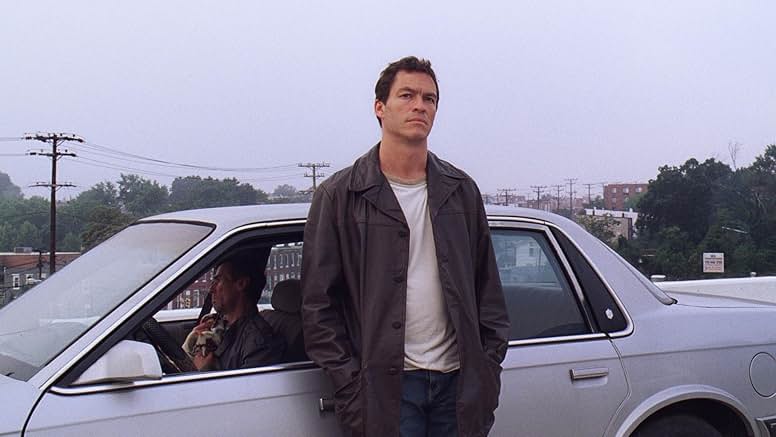
Surely a contender for the top spot, the series spawned out of show runner David Simon’s gritty reporting and his knowledge of Baltimore’s institutions. The deadly streets, grift-plagued docks, compromised police and political institutions, schools and even the disengaged newsrooms stood in for dire civic losses, as the grasping for money and power led to a blasé take on a system of sometimes competitive, sometimes institutionalized corruption.
A telling scene occurs in 2003's Season 2, Episode 6, “All Prologue,” when defense attorney Maury Levy, played by Michael Kostroff, defensing a competing thug, cross-examines prosecution witness Omar Little, played by Michael K. Williams. Omar’s rejoinder to Levy’s attempt to expose Omar's blase' criminality produces the declaration that would prove out in later episodes:
“I got the shotgun, you got the briefcase — it’s all in the game, though, right?”
3. Mad Men (2007–2015)
Showrunner Matthew Weiner came out of David Chase’s "Sopranos" writing room, and even as he was laying out a pessimistic vision of America, he fascinated us with the wily magnetism of Jon Hamm, who entered into ongoing robust stardom by playing the show’s ad exec Don Draper. Draper’s profession taught once-stolid suits how to inhabit Americans’ dreams in the name of profit and yet find a way to inculcate a sort of hopefulness so the message could go down easily.
Somehow a taunting hopefulness was alchemically ginned up out of Don Draper’s own darkness. He was one of us, but still a cipher.
“What is happiness?” he asks executives who embrace his knack for unearthing previously hidden messages. “It’s a moment before you need more happiness.”
By contrast to the two man-centric shows cited above, the series moved the women’s roles toward an uneasy primacy. The arcs of Elisabeth Moss’s Peggy Olson, January Jones’s Betty Draper, Christina Hendricks’s Joan Holloway and Kiernan Shipka’s Sally Draper deserve particular notice.
I profiled Hendricks for the Los Angeles Times in August 2012, as she headed into her third consecutive Emmy nomination for playing Joan.
4. Succession (2018–2023)
Showrunner Jesse Armstrong’s Succession quite rightly lands in the front rank, the Fourth Streamer of the Apocalypse. (Author Stephen Marche dug in deeper in the Time's opinion page recently) As the Murdoch publishing dynasty taught us — and the British makers of this landmark series showed with elan— massively rich corporations are global in their holdings and influence. Populated by greedy tech overlords, feral attorneys and conscienceless spin controllers, it delivered family and romantic dramas calculated to constantly set your teeth on edge.
Brian Cox’s Logan Roy states his thesis in Season 3 to his feuding, unserious family: “Life’s not knights on horseback. It’s a number on a piece of paper. It’s a fight for a knife in the mud.”
As Succession executive producer Lucy Prebble told me for the Los Angeles Times, Shiv was “a useful allegory for a sort of self-interested centrist” — a figure who can be persuaded toward whatever gives her access to power. Prebble also said, “We believe passionately in accurately portraying the idiocy of these people with equal opportunity.”
5. Fleabag (2016–2019)
Here, alas, I part company with the picks made by the voters. One must offer at least a muffled shout-out to Phoebe Waller-Bridge as she makes us laugh time and again, and there’s a more profound awareness that she is a front-runner in catching the shifting temperament of the never-ending potty-mouth war between the sexes.
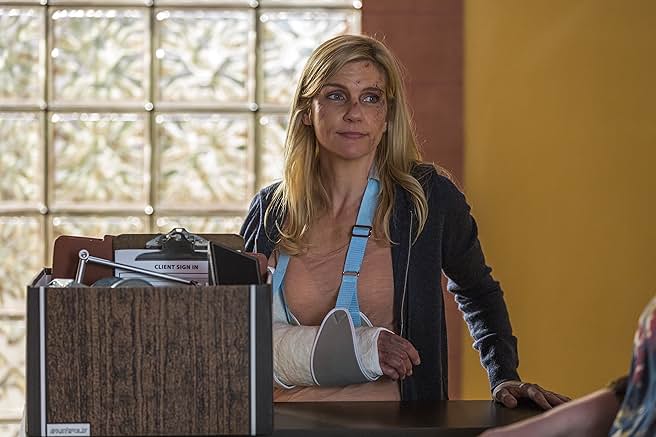
But if she’ll step aside, it’s time to insert here Vince Gilligan’s second epochal show, which the Times tally undervalued at No. 27:
Sub in: Better Call Saul (2015–2022)
Created by Gilligan and Gould, the show shows the further adventures of lawyer Jimmy McGill’s transformation into the criminal attorney Saul Goodman. It fused brilliantly with the established-as-deadly Albuquerque ethos and, crucially for this blogger and his revised list, brought Rhea Seehorn’s Kim Wexler into full award-winning bloom.
More recently, Seehorn starred in the first season of another Gilligan pathbreaking effort, Pluribus. The Apple TV+ series premiered in 2025, with Seehorn as Carol Sturka. Gripping though it is, there will be a wait for the next chapters.
6. Game of Thrones (2011–2019)
We now see that the sprawling tale of feuding kingdoms somehow prefigured the monarchial tides that would follow. The show remains a showcase of fervid thespian zeal, and a deft adaptation of bucketloads of great source material, with spirited and canny performances everywhere you look. As unmissable as a bucket of molten gold being poured over some upstart princeling's nasty, spoiled, feckless twit head.
7. Veep (2012–2019)
Julia Louis-Dreyfus in serrated comic form. She’s been bringing the ironic/funny for so many years now, seemingly hasn’t aged a month, and is fully equal to the rapid-fire dialogue you will always lean in to hear.
The Times placed "Veep" at No. 7, but I went ranging deeper in the also-rans to offer a pick-em for insertion in its place, each delving into spy work in a parlous world where superpatriotism brings death: "Homeland "(2011–2020), with Claire Danes' summiting role, sits under-loved at No. 38, or "The Diplomat", with the always-tops Keri Russell (2023–present), plucked from No. 94.
8. 30 Rock (2006–2013)
My sentimental comic favorite: sardonically pitched, wonderfully self-aware, laugh-out-loud funny when it’s not making you despair over human nature.
9. Curb Your Enthusiasm (2000–2024)
Some years ago I wrote a Rolling Stone cover story on Jerry Seinfeld — the magazine printed two different covers, featuring contrasting visuals with Elvis get-ups: slick, dancin’ Elvis and Fat-gone-to-seed Elvis. Though the story leaned into Jerry’s coming veer into stand-up (when not busy simply counting his money), he showed sufficient boredom in the process that only by dint of Larry David’s wry interjections was an edgy interview possible.
So even though even Larry barely had time for a stop-and-chat when I thanked him years later at some Hollywood event, I have to slide "Curb" off the board and here insert another personal fave, one the Times benched at No. 83:
Sub in: Justified (2010–2015)
If the Seinfeld duo were disengaged, a bit too cool for school, the personable Timothy Olyphant as this show's fearless if canny quick-drawing marshal and his onscreen frenemy Walton Goggins as Boyd Crowder personified willingness. Nicely fired up! is how I’d describe the thoughtful Goggins; ever-so-casually good to go would be the phrase to fit Olyphant.
Plus, for all the craft the casting people showed with the regulars and a courthouse full of corks and miscreants, as many delectable laughs per episode as any show birthed out of Elmore Leonard’s distinctive darkness could ask for.
Atlanta (2016–2022)
Donald Glover is a thinking fan’s multi-hyphenate, and the series, with its fine cast, captured the zest and nervous underbelly of an intriguing city, but I have to hand the tenth spot to True Detective Season 1, listed by the Times at No. 35.
Respect added to a close runner -up for the final spot– disregarded Fargo, Noah Hawley edition. Although it spawned some excellent follow-on iterations, ultimately I’ll take Matthew McConaughey and Woody Harrelson, each never better than here opposite each other.
Finally, there was some jostling in the also-ran list, but there’s plenty great to watch in various seasons of various items that got respect. My honorable mentions include:
The Office (U.S.) No. 11, which ran from 2005 to 2013; "The Office (U.K.)," No. 16, which ran from 2001 to 2003; and Band of Brothers (2001), No. 28. House of Cards (2013–2018) is No. 48; The Bureau (2015–2020) is No. 54; Slow Horses (2022–present) is No. 62; and Ozark (2017–2022), the list's No. 68.
The commentaries from the various voters the Times reached are lightly amusing, even if the respondents tend to be generally of somewhat second-tier scale in terms of boldface names — more chat from big-shot show runners would have been welcome. But some do offer smart appreciations.
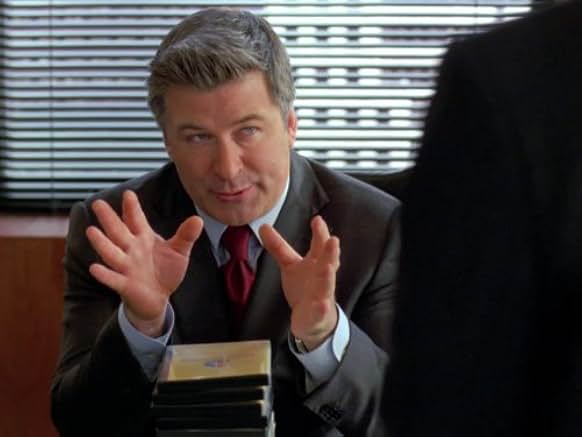
In fact, I think we can comfortably close with Alec Baldwin’s favorite line to Tina Fey’s Liz Lemon. She’s just quoted a colleague saying, "women become obsolete in this business when no one wants to pay to see you naked, " and Jack Donaghy answers with his carefree if louche businessman's logic: “If you make enough money, you can pay people to look at you naked.”
Comments ()