

Springsteen's "Johnny 99" Is the Underrated Banger We Need Now
Well they closed down the auto plant in Mahwah late that month
Ralph went out lookin’ for a job but he couldn’t find none
He came home too drunk from drinking Tanqueray and wine
Got a gun, shot a night clerk, now they call him Johnny 99
“There is finally something irrevocably lonely and restless about him,” was my honest guess about Bruce Springsteen in a January 1981 cover feature in Rolling Stone, “He’s never claimed any different. Springsteen wants to inspire by example—the example of a trashed and resurrected American spirit.”
I perhaps wouldn’t be quoting the above if It hadn’t, ever since, remained my honest sense of the man. At the time It felt like a stretch, even as the keys tapped it out, but over time it’s come to seem simply self-evident.
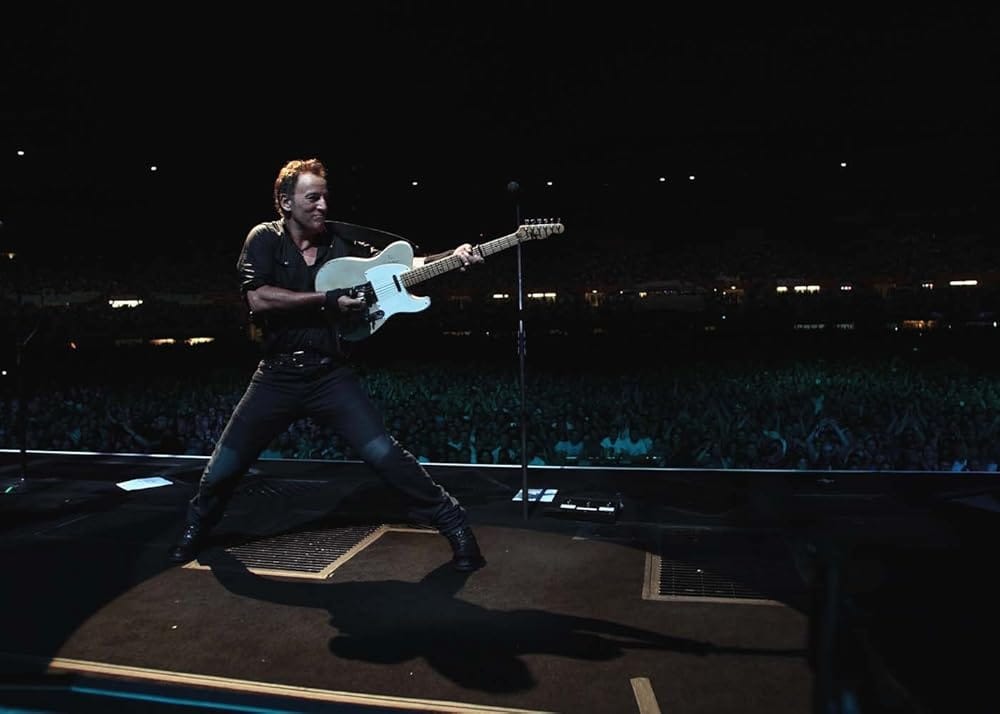
Before this all gets too weighty--hey, it’s Christmas Eve– here’s the song in question, played three years after it first dropped (well before the cantering, almost Chuck Berry version later onstage renditions would bring). Here it holds its own on the “Born in the U.S.A.” tour just Niles Logren adding acoustic alongside a fully fierce Bruce in his buff and bandana’ed period, at Giants Stadium in 1985:
He would even incorporate it among the handful of his own tunes for the folky 2006 Sessions band shows, notably here in New Orleans at Jazz Fest:
The song came out of a time now solidified in an increasingly revealing pop culture legend, a time when Springsteen drilled down beneath the already palpable gloom of the theatrical darkness on the edge of town into something still deeper. It was a time when the artist took to “examining his soul,” to borrow a phrase from the Flannery O’Connor novels and short stories he was devouring at the time.
The contention being made in the above headline is simply this: the singer-songwriter, in unveiling what he found inside himself through his acoustic sketches in the plainly furnished Colt’s Neck, New Jersey rooms he inhabited, found something lastingly profound and relevant for all of us to relate to, then and now.
No song better encapsulates all of that than the nearly bare track—chosen from a pair of takes done in that rather forlorn spot—than the rockabilly-adjacent “Johnny 99”, a song he all but dismissed in a scrawled note to manager Jon Landau as “kinda fun…I don’t know if this song is a keeper or not but I thought you’d get a kick out of it.”
In the end, it's an album about a search fo a soul under the color of dark grey murder. The anti-hero of an album that once flirted with the title of "Starkweather" had "Killed everything in my path," and imaginably last of all, "when the man pulls the switch, sir," he'd be electrocuted with his "pretty baby" "sitting' right there in my lap." Given his longtime immersion in Bob Dylan "the father of my country...had deftly melded the personal and political", Johnny 99's wondering "If you can take a man's line for the thoughts that's in his head" cannot help but reverberate with this from Dylan's "It's Alright Man (I'm Only Bleeding)": "If my thought dreams could be seen/They'd probably put my head in a guillotine".
Personal becomes political; what killing is not done by the singer is reserved for society's retribution; Judge Mean John Brown is an echo of the sheriff John Brown who always hated the man who killed him– though not the deputy--in Bob Marley's "I Shot the Sheriff."
"Johnny 99" would morph into a kind of Chuck Berry shuffle (a cousin to the pure "hey, ho rock and roll" pure id of "Open All Night"). Over time, it emerged in live performances as curiously upbeat in tempo and tenor. He even did it as a folk-imbued, fiddles/horns/cowbell etc. frolic with his jazzed-up Sessions touring band when they played the New Orleans Jazz Fest in 2006. But perhaps it was most grandiloquently showcased before before a crowd of many tens of thousands in London’s Hyde Park in 2009:
https://www.youtube.com/watch?v=vSc8svSJOxE
One crucial element usually missing from such rare performances is the keening yodel that Bruce first let loose as a reedy if melodic wail that sounds distinctly apart from every Springsteenian vocal that preceded or followed it. In an album that’s steadily in close touch with mortality, it rises up like the Angel of Death beckoning us to draw near listen, a woeful skein that’s all head tone and woe, more a valediction than an intro.
In all of the Springsteen canon, “Johnny 99” stands apart. (He rocks out on "Open All Night," It was not for nothing that it became the title song of Johnny Cash’s 1983 album, and while Cash took a stab at depicting its message in an ersatz promo video for the release, it’s his cover of the “Nebraska” album’s “Highway Patrolman” that feels cinematic—more so, perhaps, than Sean Penn’s 1991 directorial debut ("Indian Runner," from his own script), which moved the story from Michigan backroads to a 60s Nebraska.
Springsteen's versions of the song would alternate between citing the "killing line" and "execution line" over the years. New Jersey had actually revived capital punishment as a sentence in 1982, but by legislation ceased it in 2007. (No one had actually died in the chair since 1963.) .
Delving into the lyric with its half-buried rage, it’s impossible to miss the resonances for then and now. If Bruce’s generation (he turned 76 in September) felt “the system” outlasted our hopes and dreams, he felt it keenly as a figure who helped lead the fight. “There’s too much greed, too much carelessness,” he told me in an all-nighter talk, “I don’t believe that was ever the idea of capitalism. It’s just gotta be voices heard from all places, that’s my main concern, and when you’re up against big business and politics, you gotta have some muscle.”
That northern Jersey auto plant indeed had closed down in the summer of 1980, a few months before the October release of “The River” and subsequent world tour. By the time of the Colt’s Neck solo sessions that between December 17th January 1982 that would bring forth “Nebraska” in September, 1982, the plant ‘s 3700 employees (as well as 8,0000 more nationwide in other Ford plants) were either transferred or laid off. The federal Bureau of Labor Statistics used the coinage “Discouraged workers” to distinguish those suffering worst under the worst unemployment rate—9.5 % --since the end of World War II. It described workers who had quit seeking the generally unavailable jobs.
Aside from his despair-laden moniker and the soul-shriveling events detailed in Springsteen’s song there was not much truly fictional about its subject. (This writer knew Mahwah briefly if painfully. My first assignment as staff reporter at the regional paper covering the region was to collect quotes about, and photos of, six children who had, heartbreakingly, died in a house fire in 2008 in the impoverished region where the plant stood near abandoned coal mines. They were trapped when a kerosene heater—such as the singer’s own family had used in their Asbury Park home—caught fire in their ramshackle lodgings.)
Now judge, judge, I got debts no honest man could pay
The bank was holdin’ my mortgage and they was takin’ my house away
Now I ain’t saying that make me an innocent man
But it was more than all this that put that gun in my hand…
More, indeed. As this week brought the economic data that had been held back after the DOGE mess finally got tidied up a bit, on December 16, national unemployment reached its highest level—4.6%--in four years. For black workers---in a trend described in a Wall Street Journal analysis as “harbingers of what’s to come” more widely was upto 8.3%. Goods producing—hamstrung by Trump’s tariff scheme, or rather, taxing trade war) dropped steeply, as manacturing shed 5,000 jobs in November, with wage growth stilled despite a promise of just the opposite.
Further, from the Wall Street Journal: “American workers’ confidence in finding a new job if they lose their current one hit its lowest level since the series began in 2013, according to a recent survey by the Federal Reserve Bank of New York”
Finally, as the mutely suffering middle class joins the likes of Johnny 99’s shrinking working class cohort, AI seems sure to metastasize what’s become known as ”job hugging”—and we’re facing all of this with a remorseless and seemingly addled chief executive driving the bus.
A sort of confession here, as to the cinematically impure thoughts that came to me watching “Springsteen: Deliver Me From Nowhere.” This writer briefly met Scott Cooper after a screening, and that most virtuous and thoughtful of filmmakers ran an earnest campaign, as did his subject, for the film’s awards campaign:
 Fred Schruers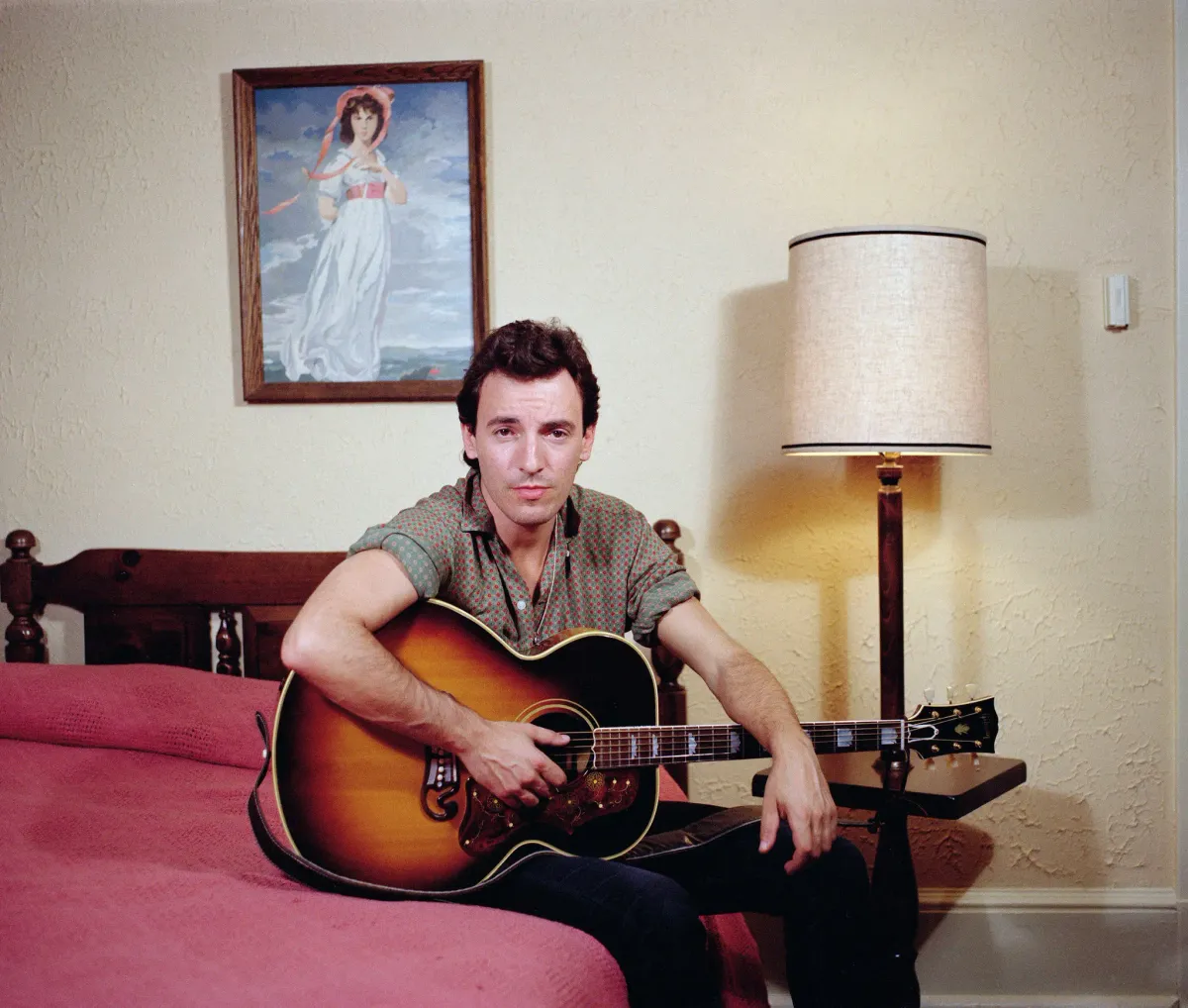
His all-in writing and direction demand respect. Likewise Jeremy Allen White’s earnest efforts as the central figure, and beside him, Jeremy Strong is alchemically credible as the mentor (to Bruce, of course, but also to my own career scufflings).
And yet the probably crackpot idea called out to me. When Bruce and his cross-country road buddy find themselves at a sort of county fair deep in flyover country, and even as we fixate on the movie’s Bruce as he’s succumbing to paralyzing depression (per his autobiography “the black sludge …threatening to smother every last living part of me, ) I mentally inserted a scene that would have been a long reach. That surely country-fied band in one scenes background, cranking out nearly unheard music for a milling crowd—what if they spotted our boy? What if they invited him up, the ever-avid performer, and he acceded to playing , say, “a new thing I’ve been trying to get right”?
Yeah, we know what song. So. After a brief consult with the band, he’s handed an acoustic guitar , and out if comes. First the wail—like nobody else exactly, but informed by everyone from Roy Orbison to Elvis to Jimmie Rodgers--yes, “Mule Skinner Blues (Blue Yodel #8)--to Roy Acuff (the acknowledge source of “Wreck On the Highway” soon to appear on the “Born To Run” album) to Nusrat Fateh Ali Khan, a bubbled-up stew of nameless woe. It’s from multifarious sources but mostly just essential Bruce, rising out of that sludge, moving from that ululating muzzein call to something akin to Bobby Fuller Four’s “I Fought the Law”), a garage-band rocker with the crowd scooting boots in time, as he passionately strums and hoots and finds a way to some kind of joy.
And yes, if that cockamamie idea is no gift to cinema, I will remain convinced that “Johnny 99” deserves a central spot in Springsteen’s body of work--and what it all means to us.
Comments ()