

On Our Screens, Iran Plays "Nine-Dimensional Chess" While Trump Begs, "King Me"
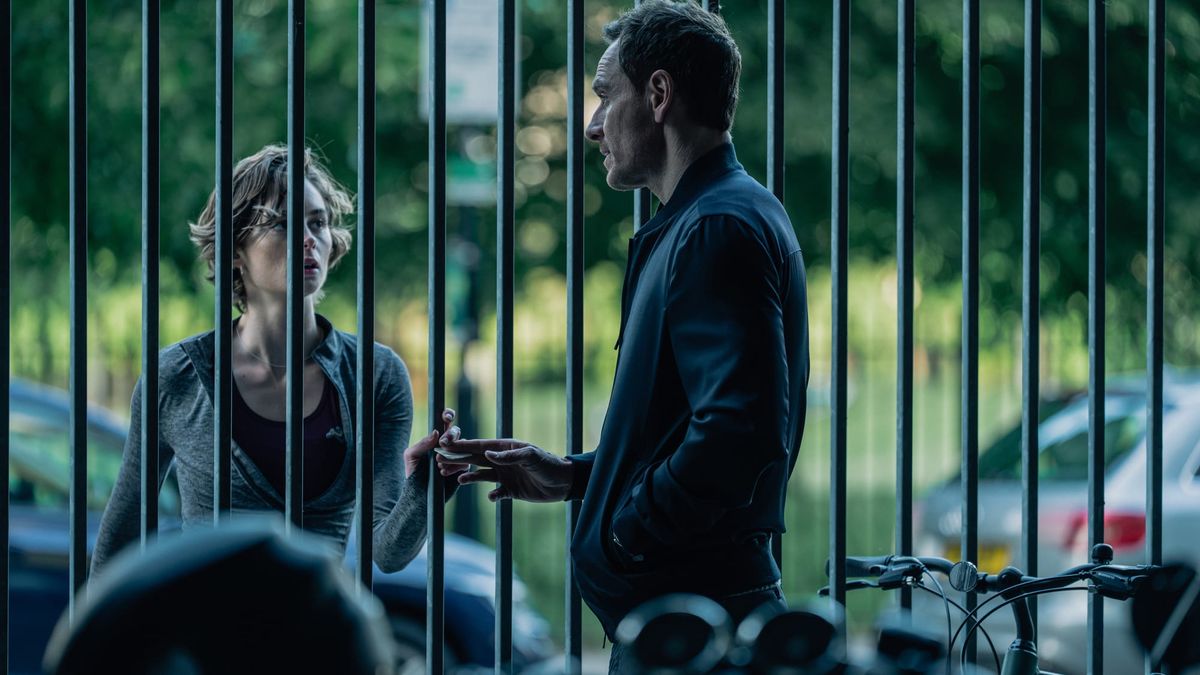
Deep into the tenth and final episode of the second season of “The Agency", Katherine Waterston’s Naomi Ford character seeks to wise up her C.I.A. office rival Craig, who also happens to have just 86’ed their office romance. She offers this in one of her terse if deeply researched declarations: “Everything in Iran Is nine-dimensional chess. You move the wrong piece at the wrong time, and it gets taken. And you don’t even know who took it.”
The comparisons to Trump’s current loss of leverage to Iran in his slapdash war of choice are only too plain. Call out the commander in chief’s s colossal miscue as bad luck for the globe’s economy—particularly for Americans--but we have to give credit to the prescience of the show’s writers. It’s as if they saw February 28’s Operation Epic Fury face plant coming.
Hell, there’s probably not a crew or cast member of the show (shot mostly in London where the setting is a local C.I.A. outpost), who understands as little about the chess pieces as the American president.
Like a kid playing checkers who just scored his first jump, and even as he has replaced an extant nuclear deal with violent affrays that killed kids and mostly choked the Strait of Hormuz, Trump is still exulting, “King me!”
He has designated seasoned phony J.D. Vance as spear-catcher for the continuing fallout.
Just yesterday he cowed enough enfeebled Republican to prevent the passage of a war powers act designed to symbolically reign in what can’t be unf*cked.
And even as I type this the U.S. is hitting various missile, drone and radar locations after an Iranian drone hit a Singapore-flagged cargo ship.
Without quite comparing my foresight to that of to the playwrighting clairvoyants, I must add that I gassed up at Costco already this morning, so there’s that.
Back to cases for “The Agency”, which now seems all the more relevant.
It’s not just the painful real-world comparisons that make the series’ now-available two seasons on Paramount+ Showtime worth watching. As viewers, we are also treated to probing character work by a team of top -drawer actors. They spar in over lit, floor-through expanses rooms and claustrophobic secure spaces, displaying s a savory dramatic blend of private traumas and public realities (including a Hegsethian character, of whom more below).
Somewhere out in the field are the agency’s NOC’s (Non Officlal Covers), who risk imprisonment, torture and execution; overseeing their spy craft are the now (mostly) desk-bound veterans of the same dangerous game.
The resultant suspense and occasional action set pieces are made all the more credible by the show’s superior production values; it’s a spy thriller with political ramifications, blended with smart intercutting to keep us watching.
Indeed, some may agree this is a moment where not a lot of must-watch TV is pushing through the streaming industry’s damaged production pipes; so instead of wondering if say, AppleTV+’s lurid “Cape Fear” iteration can find its feet while unspooling its current weekly dosages, “The Agency” might be your new binge.
With "The Agency" scoring ample viewership (10th among all TV offerings in June) and respectful Rotten Tomatoes numbers (the critics at 90, the public at 85), it will be a surprise if we don’t soon hear that a third season is green-lit. Given its positioning as a carefully engineered renewal of the Showtime brand under the banner of Paramount +, it's an entry that the streamer began crowing about ratings when the first airings of what’s now twenty episodes dropped in December of 2024.
Hitting high water marks for popularity and a scooping of prestige is part of a search to restore Showtime’s sometime branding, this time under key exec Chris McCarthy, to being as hip and sassy as it was in the days of “Homeland" and "Billions".
We’ll skip the inside baseball prognosticating what may play out via the coming content bake-off under corporate kingpin/Trump rooter David Ellison, but “The Agency” is McCarthy’s biggest swing—he signed off on an initial $12 million investment to build out a sprawling, realistic and cinematic-scale office set. He found the funding in part thanks to some earlier cost-cutting of lapsed and lesser shows he earlier poleaxed as write-downs.
There were further consequences, including to the Showtime personnel roster. As the Wall Street Journal put it: “Much of its staff got laid off and even the brand name got swallowed, becoming Paramount+ with Showtime.”
One key element—perhaps the key element—was recruiting writer Jez Butterworth, who before emerging as both as a script doctor and sole writer (Ford vs. Ferrari), made his name with London stage plays such as the Mark Rylance-led “Jerusalem". He shares the credit on all the series’ episodes with brother John-Henry Butterworth.
The U.K. show runners seem to keep outsmarting the Yanks. It’s one of the truisms of the international dark-comedy arms race is that a play-wrighting cadre in their writing rooms are probably going to go deeper (see “Succession”) than the latest Lampoon clubbies couch-surf into the U.S. industry’s writing rooms.
The series’ prestigious call sheet reveals that McCarthy joined with his showrunners in demonstrating a keen eye for casting, insisting on landing Richard Gere as the station chief despite three turn-downs from the 76-year-old star. As he's quoted by the Journal : “This is much bigger than I had imagined…more people, more money thrown at it. Every day we come in, it feels like a movie.”
At an estimated 1.2 million to shoot each episode (before star salaries but buttressed by healthy cost give-backs from the British government), the series has hit a sweet spot in production values. The first two episodes of each season were directed by Joe Wright; as might be noted anyone who’s seen say, his near-legendary one shot on the Dunkirk beach in 2007’s Atonement , there are no wasted frames in his work.
Other episode directors, including Grant Heslov (also a co-producer along with producing partner George Clooney) have kept up the standard. As one might expect from watching, say, a David Fincher or Michael Mann film, visual details abound and carry a subliminal message enforcing various scenarios’ reality. Small touches of authenticity paint the picture; when powerfully convincing Jodie Turner-Smith as Samia (a Sudanese anthropology professor, plus much more) is locked away in a threateningly dreary cell, the spavined, peeled dirty-yellow plaster she forlornly sits against is credibly aged. Back in Blightly, rather than the standard shoot-it-quick-and- check-the gate for a two-shot of a meet-up London park bench, even as the spy duo hides in plan sign, in the near distance we see dogs frolicking, as dogs will do--but not so often on the typical small-screen projects that shoot more hastily.
The series has from the start has been unafraid to show what’s relatably ordinary in office politics, while th principal players brace for terrible news their life-or-death choices trigger. There’s a convincing verisimilitude at work as the key figures' dominance-jousting turns petty, and even the bosses pursue agendas for the wrong reasons. “Like most spy stories,” observed NPR’s John Powers in the first season, ‘The Agency’ taps into our modern obsession with identity. As [Michael Fassbender's lead operative] Martian tries to juggle his romantic passion and his sworn duty, the show offers a heightened version of something universal– the gap between our public selves that act in the world and who we feel we really are inside.”
In such fashion Naomi is a study as she bristles with throttled anger, but her tactics and insights tend to be the correct ones. “So,” she will say to someone who proffers an overly risky counterintuitive plan, “Dumb is the new smart?”
Followers of the show will be most familiar with the ongoing plight of Fassbender’s often grim-faced protagonist, code-named `Martian’. He’s the canniest of them all, but to add to the trauma of being undercover for years in spy-strewn post-colonial Africa, ended the first season being nearly killed in a suspicious ramming that knocked him off his motorcycle.
But what most undercuts his practiced sangfroid is the romantic history that such dire circumstances have interrupted. It’s a kind of gift to viewers that early in the second season a flashback passage arrives bearing the Samia/Martian origin story—a bit of a meet-cute, truth be told—whose sweetness informs the dread we’ve seen develop across later parts of their story.
Though not afraid to flash his dark humor that can be slathered with charm, to the naked eye Martian is that office control freak we’ve all met, the one who will rat you out to the boss if that helps him achieve his ends. But he’s a control freak cubed, because as we hear Martian’s stately if mournful voiceovers, we realize he actually has been laying down a handwritten mea culpa in that leather-bound journal his daughter gifted him as a goad to unveiling his humanity.
It’s probably best to dodge a spoiler here by simply saying that the second season’s somewhat equivocal conclusion won’t seem unfamiliar to those who know the source material “The Agency” adapted —the five seasons of French series Le Bureau des Legendes, which ran from 2015 to 2020 and fairly well bewitched international small-screen audiences with its portrayal of the agents and their handlers overworking their bodies and psyches for the French external spy network.
At the end of that show’s second season, the daring and charismatic “legend” code-named Malotru (Matthew Kassovitz), was taken prisoner, and just as plotting demands in a factionalized world of cliffhangers, became the focus of a quest to free him as as the third season launched.
As with spy thrillers everywhere and across all recorded show business time, the central struggle we watch is plain enough—if you deceive and prevaricate for your country, in some cases masked by a fake identity (or “legend”) for some years, who are you deep inside?
(A kindred show that deserves noting is the Netflix six-parter “Legends,” starring Steve Coogan as the UK Customs investigator who must cobble together an international quest to bust up drug-running schemes. At 83 per cent positive reactions from both critics and the public, it it’s a tidy binge based on a true-enough saga.)
The idea of creating a “legend” It’s a durable concept we might all partake of—it’s not a far-fetched emotional journey to watch these charismatic, strategic liars and wonder who you may have deceived (or should have deceived?)—over the decades of a working life. That urge for control, as cited above, leads us into our own backroom dramas–why didn’t we spot their ambition and roll the grenade of deceit back at them?
Or failing that scheme, at least find a mound of dirt to hide behind and return fire, as Martian might in one of his occasional James-Bond-as-a hot-mess moves.
The playwrighting instincts come to the fore in some Butterworth-bro's scenarios, as when the aforenoted weasel Craig (and how we want him to get his just deserts) spars with yet another female smarter than him, Ambreen Razzia’s Blair. “There’s no `I’ in team,” he proffers, and her rim shot back is quick: ”But there’s a `U’ in cocksucker.”
Richard Gere as agency head Bosko has a field day in a role he turned down several times– and then sagely tweaked so that his own history under threat is not stated but understood. We puzzle out his trauma, as shown via body language, tradecraft, and advice that drills past aphorism into a variant of keep it simple, stupid. The Gere acting vocabulary is present and somehow fits here—the slouching walk, the not quite sneering grin, the hooded squint of judgment. He coaches his junior charges by goading them. “Hide your damn feelings,” he tells Blair as he almost reluctantly guides her towards field work, “Learn how to lie.”
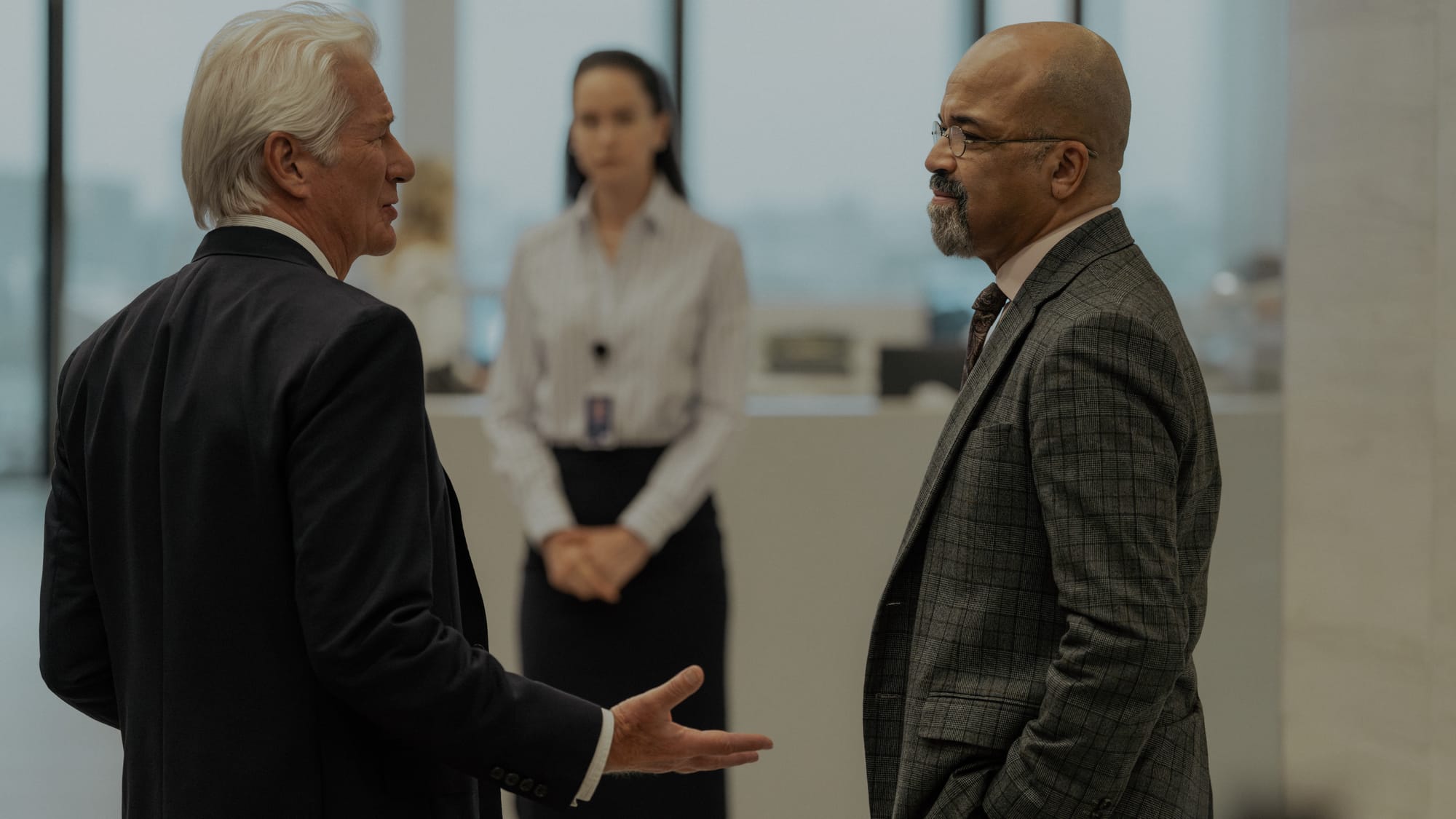
Jeffrey Wright, as we have all come to realize, is ever the impeccable craftsman as Henry. As Henry, deputy station chief to Bosko, he is at times revealed to the camera as a lurker scowling from a few glass panels away. When Bosko reminds Martian that Henry is like a dog with a bone, Martina rejoins, “I used to love that. Until I woke up in his teeth.”
There’s a sort of a hick version of a James Bond villain in the series—I must warn of slight spoilers in just this one paragraph—who, as mentioned above, is the Hegseth of the piece. Tagged as `Viking', he's attached to the Valhalla mercenary bunch (cf. the Russian war-for-hire Wagner Group). He's almost too on the nose as a Pete Hegseth dude--an ex-Marine (Hegseth was ArmyNational Guard) of scant grand accomplishment but ample posturing, with a performative streak that celebrates , uh, warfighting. Inked up with a few tattoos, (it was Hegseth's extremist tattoos that got him bounced), he’s a sadistic sociopath selling cultish mumbo-jumbo that helps stir his inner child to do very bad things. (He can even grandiosely quote Apocalypse Now when tracked to his lair: “Swim upriver—find the devil.”) Henry is pissed he's evaded the agency's spooks, and Wright's scowl is as creased as it can get: “Flush this motherfucker out—not a fishing trip, a manhunt. Kill or capture.”
The most accomplished liar in the entire team of rivals is of course Martian. The station shrink Dr. Blake tries to grill him at one crucial stage but surrenders with a sigh. “Perfect,”she says of his opaque yet cordial manner and responses, “It’s exciting--like watching DaVinci paint the Mona Lisa.” Martian also coaches Blair, and seems to realize she doesn’t have the deep, seemingly inborn chops of rising-star field operative Gremlin. (The latter is played by resourcefully magnetic RADA grad Saura Lightfoot-Leon.) Martian even dissects Naomi’s reaction to her surprise birthday party in which the entire office celebrates her 40th . There’s no tsk-tsk in his analysis, it’s just a teaching moment based on her imperfect display: “You sold shock.”
Given world events, it has to be said that Henry ‘s hard-won insight that a particular scheme for infiltrating the Iranian nuclear program (Fordow, one site of Trump’s supposed “obliteration” try, is mentioned), is simple “too dangerous” and that, hello, “Iran is a powder keg.”
Do tell.
Comments ()