
Gram Parsons: Boston, 1973, in His Fatal Year--(as re-posted online with more music links and art)...
April, 1973:
Around the time the tour bus carrying Gram Parsons and his road band The Fallen Angels on their six-week American tour was fetching up on the Boston streets, your blogger, then 25, was piloting a vehicle known as the hawker van through Boston's Back Bay.
Often I’d be accompanied by a co-worker I’ll call Bixby. He accepted the usual FM radio fare I'd tune us into, although he seemed diametrically the opposite type to Mr. David Bowie, whose landmark Ziggy Stardust album had dropped the previous June and was in heavy radio rotation. Bixby had a vaguely post-military aura. There were rumors he'd spent some time doing odd stuff for the C.I.A. in Tegucigalpa, On this particular day, as we discussed our life philosophies, he summarized mine as, “You’re a fucken nihilist then, you don’t think nobody should do nuthin'!”
He wasn’t that far off. I had standard sophomoric tendencies towards alienation. Bowie’s “Five Years” (in odd contrast to the occasional needle drops of the country-rock Parsons championed) might have been playing to the college crowd:
A soldier with a broken arm
Fixed his stare to the wheels of a Cadillac
A cop knelt and kissed the feet of a priest
And a queer threw up at the sight of that
I think I saw you in an ice-cream parlor
Drinking milk shakes cold and long
Smiling and waving and looking so fine
Don't think you knew you were in this song…
It’s hard not to hum the tune, no?
We would grapple the bundled papers off a 10-foot box truck and fill the back of a smutzy-white VW Variant with the stacks of fresh-off-the-presses issues we sold to the hawkers for a dime; they would move them for a quarter to a welcoming public. (For comparison, top ticket price for local music club gigs was around $6.)
This was the year when the paper that had been Boston After Dark, having grown up and out from a start as listings rag, was taking over the Phoenix name. (It would gradually subsume the short-lived if hipper, Cambridge-based Phoenix offshoot, The Real Paper--but not before Jon Landau wrote up Bruce Springsteen’s May 9,1974 show in its pages as "rock and roll future").
The arts section of the new Phoenix was still billed as Boston After Dark. But I couldn’t get out to much of the music that filled the city clubs—I was just a nihilist with a brain that , as Bowie sang, hurt like a warehouse, and `after dark' each day I had to report to my dishwashing job at Bette's Rolls Royce Restaurant.
That was okay. As a sort of lodger in a group living communally five blocks from Harvard Yard, some of them in grad school, we didn’t imagine we would be the last Young Americans to have gushers of fun. It’s only lately we’ve begun to think …maybe we were the last? (I didn’t have the clairvoyance to turn to Bixby and say, "The world’s only going to start to suck hard around 1979, and forty years later the dream of commonweal democracy will deflate as a bilious, porcine simulacrum of a Chief Executive would be dodging repeated attacks that seemed too be generated by either simple madness of some half-buried alienation from a reign conducted in league with corrupt family, grifters and thugs." But who knew?)
In any event, it was spring, the Sixties were still glowing faintly in the rearview, and even somebody who pretentiously read Schopenhauer (“We can regard our life as a uselessly disturbing episode in the blissful repose of nothingness”), mostly to impress a book store clerk , might still be charged with hope.
That was me, all hope. I had handed off some college music and film reviews to Phoenix editors Janet Maslin (film) and Ben Gerson (the music coverage). Thus came the day when Ben, once I’d returned from the day’s hawker run, inquired if I might want to expand my ambit from record reviews (Lou Reed, The Who, etc.) to a profile. Was I interested in Gram Parsons’s solo effort, GP?
Most definitely I was interested, based on the Byrds’ 1968 Sweetheart of the Rodeo, for which he wrote “One Hundred Years from Now," and co-wrote “Hickory Wind. ” He sang both those, plus covers of George Jones’s “You’re Still On My Mind" and “Merle Haggard's " Life in Prison."
He was a nearly spectral figure– though with a foot in Nashville--on the East Coast: the key singer, songwriter and instrumentalist in the mostly West Coast dawning of country rock on the Byrds' Sweetheart of the Rodeo album and various incarnations of the Flying Burrito Brothers.
Gram and The Byrds sing "One Hundred Years from Now" on Sweetheart of the Rodeo: https://secondhandsongs.com/performance/68802/all
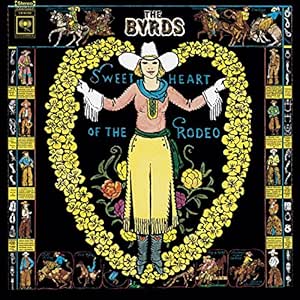
Those of course are the main landmarks that, finally this year ,are bringing Gram recognition from the Rock & Roll Hall of Fame as an early influencer.
A few words about Ben. Like his fellow Brandeis alum Landau, he was musical down to his bones. In an impromptu round of singing, say chorusing some pop tune with pals, he might cue the group with such instructive interjections as “diminished seventh!” A production glitch at the paper might bring from him the Robert Johnson-quoting complaint, “stones in my pass way.” Whether I showed my nerves over saying yes, or maybe thanks his own unpretentious enthusiasm, we mutually manifested the idea to crack this enterprise as a duo. (There had been vague tales of disruption from earlier cities on the band's tour—Boston was where the rambling hootenanny would splash down after six weeks.)
What to say about our lengthy– if enjoyable—day-into-evening with the troupe? Gram, legendarily a product of too-rich, louche Floridians, at once showed a had a transparency that’s rare (as I would discover over time) among stars of any showbiz medium.
I had gathered from half-remembered journalism tales that such meet-ups are often fueled by beverages. But the thinking for me was, that all happens …after dark and possibly into the wee hours.
Come to find out the wee hour this day was approximately 10 a.m., and the libation Gram touted to us (we politely demurred, more over hearing the stated ingredients than out of simple prudence) was what he called “The Gram Parsons Breakfast Cocktail". This drink, as he reminded the now-fidgeting young waitress, contained coffee in some measure plus Metaxa—a Greek brandy liqueur– and a suitable enrichment of dark rum. (There may have been other tasty fillips to it, but we hadn’t yet set out my clunky tape recorder; writing down the contents of this the first commodious tankard to arrive seemed prematurely nit-picky.
(It was about five years later I was somehow moved—persuaded—to engage Outlaw country singer Johnny Paycheck in a brandy-drinking show of mettle at the Palm Restaurant in Manhattan. It ended more or less in a draw—I remember thinking, Is the sidewalk vibrating or am I?”. As a sign that mentorship takes many forms, by the time fellow guest, the most excellent Chet Flippo, judiciously escorted me back to the Rolling Stone offices where he thenceforth kindly counseled me and utilized my writing services. I had gotten lucky in my friendships once again.)
The first hours we spent with Gram—not keeping pace with him on the cocktails, eponymous or otherwise--moved into the bedroom lodgings at some stage. There his companion Gretchen seemed more than a little flibbertigibbety as he cooed and cajoled her into a simulated docility. But with the temporary mystery of her misplaced sewing needle on the rumpled bed of the room where Gram posted up to answer questions brought new—discombobulation, as Trump might term it.
Ever so sadly, he would be dead on September 19 of that year, at 26, with morphine and booze taking the blame after he fatally fell asleep and could not be revived. And then you wonder what might have been.
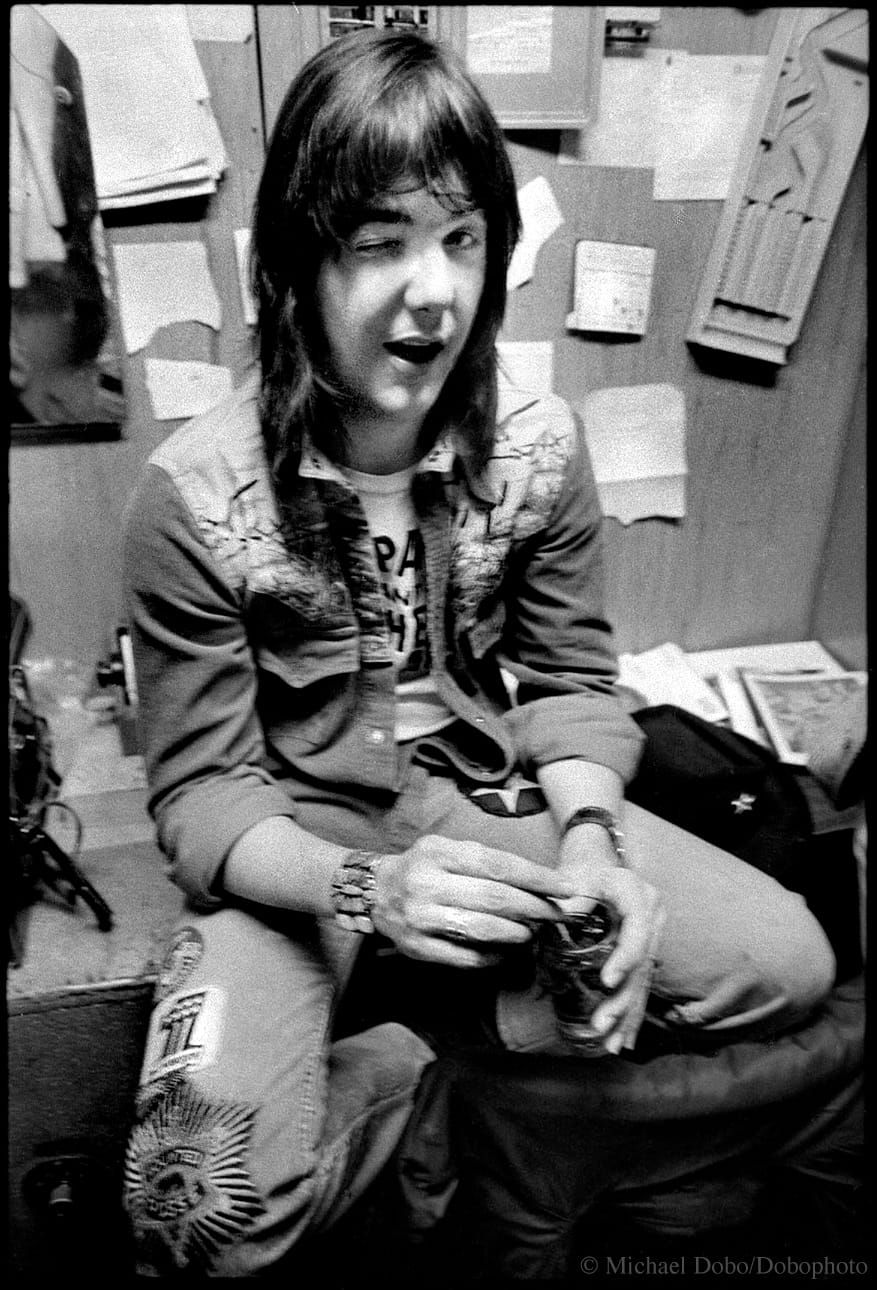
And yet the interview Gram gave us that day, occurring between interruptions.—he was balancing two radio appearances during this day of promotion—was remarkable for its candor and sprawl. The article ran at around 2,000 words, mostly quotes, and with a picture taken by Phoenix staff photographer Michael Dobo that, as you see it atop this post, captures the (literally) winking charm and magnetism of the man. After checking rights I may post that in its entirety later this week, but to whet and to some degree slake the interest of my loyal readers, let me post just a few excerpts from our article.
In context, that day:
Gram brought his new group to Oliver's last week, near the close of a draining bus tour to promote a new solo album GP. We interviewed Gram at some length. A remarkable candor born of fatigue and self-sufficiency resulted in a series of pithy characterizations of his peers and former partners. He was just as offhand summing up Jagger as he was remembering his Daddy, Coon-Dog Conner. Our talk was sandwiched between two live spots on WNTN and WBCN, and a set at Oliver’s.
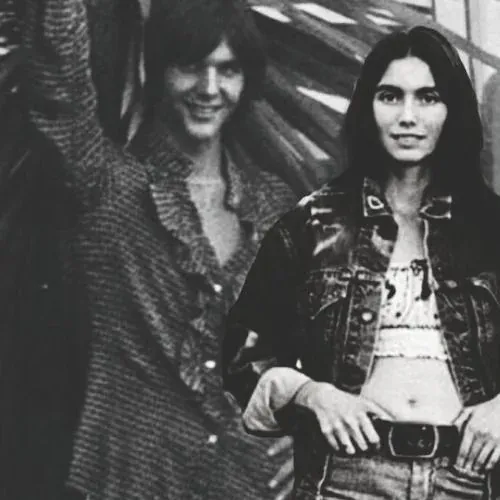
Anyone who caught those performances saw something quite like an old country clan, shedding the ravages of travel to do some really lilting and powerful C&W. A reviewer for the Village Voice went so far as to call Gram a potentially "pivotal figure in American music” after his New York visit earlier this month. Flanked as he is by Emmylou Harris, an Alabaman of pure and able voice who uses her space in classic country harmony and tremolo masterfully… Gram could be the one to put sincere C&W on the cover of the Rolling Stone.
Meeting the tattooed, muscular, and generally intense Phil Kaufman was, in the parlance of the time and the milieu, a trip. AfterI shared a polite hello and handshake with his girlfriend who was part of the rambling road entourage, he leaned in close enough to make his brushy facial hair felt. “That’s my girl and I love her a lot—you understand me?"
In the WNTN studio, with their berserkly funny manager Phil Kaufman holding the mike, they sang a Roy Orbison-adjacent take on the Felice and Boudleaux Bryant composition, “Love Hurts,” and made it a lovely example of that art. Emmylou is the Carter family with bedroom eyes. She talks about the high lonesome sound and then puts it right on the money.
On the hard-to-find album chronicling the Philadelphia date on the 1973 tour, Grama and Emmylou delivering "Love Hurts": https://americana-uk.com/gram-parsons-the-fallen-angels-the-last-roundup-live-from-the-bijou-cafe-in-philadelphia-march-16th-1973
She doesn’t look like an Everly Brother,” says Gram, “but she can sure sing like one.”
Having hoisted the Byrds into a deepened country sensibility—though their Sweetheart of the Rodeo album undersold other key entrants in their catalog in terms of popularity—left he reflecting on partying company with them afterwards:
’ Roger McGuinn Gram found at least as provocative as Chris: ‘‘He’s the weirdest guy in the world, man. . . He’s very conscious of image. Say a guy like you comes in with a tape recorder — he'll bring out his tape recorder. . . and he’ll play with your head. Because that’s what he’s expected to do, being Byrdmaniac Roger McGuinn. He'll have a tape with all the questions you’re gonna ask him about, where did he come from, then he’ll play his tape recorder into your tape recorder--that’s his idea of a good time!
Gram had kinder words for the Stones, whom he befriended in L.A. in 1969 at the outset of their American tour, and whose “Wild Horses” he was given to record with the Burritos months before the Stones’ own version appeared on Sticky Fingers.
Jagger, Gram found to be considerably more circumspect than the press would have us believe. He was, he said, essentially a straight, possessive dude who might swallow an Excedrin once a week to fall asleep, who enjoyed owning an entire English village and a castle in Ireland. ‘His fetish is collecting houses.”
“What’s Keith’s fetish?”
“I’m not talking.”
Most hair-raising of all were Gram’s asides regarding sometime Stones confrere and lover Marianne Faithfull, as were his takes on the mysterious circumstances surrounding discarded Stone Brian Jones’s marginally mysterious death. In sum:
Gram threw these comments off, a fortune teller drawing back from the pit of rock-stardom, one just trying to front a country band, and play the music he knew before he ever went to the city; Sin City.
“Everywhere we play ‘Sin City,’ people think it’s about their town,” said Gram to the audience one night last week, “So I guess it is.”
#
Comments ()