

"East of Eden" Gets Under Your Skin
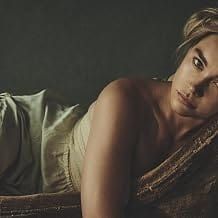
John Steinbeck: "Men and women wanted to inspect her, to be close to her, to try to find what caused the disturbance she distributed so subtly.”
--J
Men and women wanted to inspect her, to be close to her, to try to find what caused the disturbance she distributed so subtly.”
John Steinbeck’s description of his novel East of Eden’s central figure Cathy/Kate
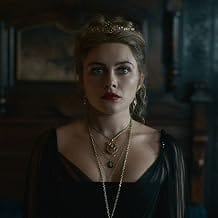
In Zoe Kazan’s seven-part series “East of Eden” on Netflix, Florence Pugh plays the dark-hued antiheroine, whom we meet as a child named Cathy, but later will know as Kate. (She’ll change the surname as well—for indeed, that are dark secrets to conceal.)
What Pugh accomplishes is an extraordinary display of her chops throughout the storyand it’s not for nothing she shares producing credit with writer-director Zoe Kazan; they labored mutually on this project for some six years. Kazan has detailed in her interviews that she wanted not so much to supplant the directing job her paternal grandfather did in the 1995 film version, but to find a deeper fidelity with Stainbeck’s book. (Though Elia’s version is at times hammy, not least in the gymnastics of emerging icon James Dean, it helped earn him an honorary late-career Oscar alongside On the Waterfront and Of Mice and Men. Of his testimony during the HUAC hearings of 1952, not all was forgiven.)
The long-gestating revisions of the book emerges as highlighting some half-buried elements (e.g. actor Hoon Lee scores meaningful moments repeatedly in showing us the journey of an immigrant manservant) and regretfully carved away others. (E.g.: The complicated Irish clan the Hamiltons are given their due mostly thanks to a robust performance by the mightily effective Ciaran Hinds as their patriarch.)
So much of Steinbeck’s sprawling story is about what humans do in the shadows—so murky are the emotional depths that one character suffering through the story’s tumultuous events must finally ask another, “You mean in the whole world there’s only evil and folly?”
Many of us learned that lesson incompletely until Trump came along. Comparing the worst soul-destroying Trump administration evildoing to the worst perversities TV and the movies can show us is old hat around this blog, but one can say, also not for the first time, that there’s something oddly comforting in the show’s reminders that most villainy is nothing new.
“East of Eden” has rewarded it’s the streamer’s avid promotions—and high expectations—with a nicely expanding viewership., according to Netflix’s own obscure tallies. And that success Is not simply because the late-summer high tide of should-see TV is otherwise underwhelming.
We’ve been watching the detectives, along with plenty of spies and gangsters and tech bro’s, but in Kazan’s world we see folks living on the earth, cooking salt pork, and fighting off their worst selves rather than bad guys. This isn’t to say there’s any lack of incident. Our viewing sensibilities haven’t really broadened in a fashion that would make East of Eden” instantly digestible. Even. rom the trailer we glimpse that a young woman has been terribly beaten, and though at times the story and the fatal scenarios will tiptoe into a kind of Gothic horror, Kazan’s film has created an original sort of of niche—a moral fable with lust, violence, deadly betrayals and criminality mingled with stories of forsaken love between families and romantic partners.
Some Netflix subscribers, wearied of the guilty pleasures, of the kind of Nicole Kidman-centric school of hate-the-rich, plot-twisting scenarios, might be wary of a potential turn to cheesiness. Another word for such mingled entertainments is melodrama, which is probably a tag we shouldn’t shrink from.
One articulate academic who has written convincingly that our pop culture should go ahad and embrace the term is Yale scholar Peter Brooks, who has pulled insights from his immersion in the genre to define the term as “a heightened and hyperbolic drama, making reference to pure and polar concvepts of darkness and light, salvation and damnation…melodrama is similar to tragedy in asking us to endure the extremes of pain and anguish…we accede to the experience of nightmare.” (It was James, himself the author of such semi-potboilers as The Portrait of a Lady, who saw Frecnh novelist Balzac as the father of much novelizing that came after him. He called the collective Balzacian edifice that is his Lost Illusions story cycle a “magnificent lurid document.” Seen from that angle, we understand Pugh’s entirely apt insistence is recent interviews that her character was never meant to ba a “monster” . By the time we’re done with the show’s seven episodes, we’ve learned just enough of how Cathy/Kate was preyed upon by men from early childhood, and is vexedly and cleverly extracting a kind of vengeance. She hurts some people we happily loathe, and some we like and sympathize with. Without tucking too deeply into the plot, what Steinbeck and both Kazans portray in her story is two sets of brothers, a generation apart, living through the at times heartbreaking ride on which her character bitterly takes them.“I don’t think you can ask a woman who’s been battered to within an inch of her life to feel safe around men anymore,” Pugh said recently in one her voluble promotional interviews.
In his study The Melodramatic Imagination: Balzac, Henry James Melodrama and the Mode of Excess, “ Brooks writes: that “As spectators, we can deviate from the melodrama—call it a hoot, at times—and yet still be seriously thrilled by it.”. Steinbeck’s acuity as a social critic was hardly doubted once he planted a flag with 1937’s Of Mice and Men, followed by The Grapes of Wrath in 1939. But Steinbeck always felt his masterwork was East of Eden, where he grappled with whether our family ,and our past, forever defines us. Prominently in the novel, and even more so in the Zoe Kazan series is the concept of timsheh—roughly translated as “thou mayest”. (The moment strives to makes its point even as the etymological details grow dense and iffy—but Hoon Lee is an actor who exudes veracity, so we roll with it, feeling that a kind of hope can abide. Even as the character’s arc is bending towards misery that the writer-director shows us nothing less than an America reinventing itself,--and a couple times over at that. The show could hardly have landed at a more relevant time, growling out messages and melodrama in alternating doses, even as the November electoral cycle tests whether the country has abandoned all sense and yielded sway to a deeply corrupt oligarchy. Of course the ongoing superlative reception for Florence Pugh’s portrayal of the show’s unmistakably key saga is well-placed. If we discard the term “monster”, as she asks, we see in. her performance a rather more nuanced account of a woman’s s revenge against oppression.
It's a performance of dangerous heft. We judge her even as we watch her, but at the same time, to borrow a phrase for our Chief Executive, despite her evil ways we might be dating her ourselves.
Sure, not everything in our present world view has to be tainted by the perfidies of Trump, but it’s worth going under the hood of our imaginations a bit to certain overlaps between the eras.
Steinbeck’s story begins in the recent aftermath of America’s Civil War, detours into what the epoch called the Indian Wars, invests feelingly into the individual and societal miseries of a Chinese immigrant population, and lands with jarring impact on the far-distant yet terrifying battlegrounds of the first world War. Then as now, it’s fine for the privileged class to send the nation’s- ‘s sons off to fight a war—as long as your own offspring can dodge it. There’s even a trigger-happy lawman who, with scant justification, guns down a fleeing suspect.
Even as the local politicians, barristers, clerics, fat cats and power brokers who have been covertly photographed in honky-style freak-off’s walk free, thanks to the destruction of the photos of their feral horn-doggery, the similarities intrude.
It’s almost too on the nose to point out that the source of his rise to power, the New Jersy lawter and real estate baron Charles Kushner, rose to wealth and influence with his own story. Of hatred between siblings. In his case, Charles found bef with his brother-in-law, spouse of his siter Esther, seduce her husband, who was cooperating in a federal investigation against him, and then sending her a videotape of the encounter. Charles pled guilty to 18 felonies, including tax fraud, making illegal campaign contributions, and witness tampering. He served 16 months in prison. Predictably but pathetically, Charles was rewarded for his life of varletry by Trump’s appointment making him Ambassador to France.
Of the overhyped diplomacy practiced by Charles’s son Jared even as he sets up various get-rich-forever grifts in the Middle East—well, who has the time to revisit that? Suffice it to say you’d have to have a very forgiving nature not to take pleasure in seeing Ivanka Trump learning that she and hubby Jared ar honored guests only among the cadre who have bought into family’s programmatic grift, and that of her stupidly grinning,corrupt brothers Don Jr. and Eric. Charles’s letter to sister Esther (it emerged in a trough of pleadings for sentencing clemency) was handwritten, and could have come right out of Steinbeck’s novel: “How did hatred and sibling rivalry make us all go so astray and prove to have such a tragic outcome for everyone involved. No one is a winner in this pathetic saga." If the Trask family values sinkhole in its various permutations indeed stands as a nightmare, just how traumatizing is iour experience of it?
The production values are cinema level, from the sprawling landscapes of New Zealand (standing in for various locales, but most dramatically for the coastal California district centered on Salinas) to the very wallpaper of certain rooms as the ensemble works through their miseries. We understand early on that the terribly wounded creature who crawls onto the Trask brothers’ porch is the same girl we meet as a seemingly sweet but curiously alert young buttercup. What serves as a mask of innocence changes with an early episode of Cathy’s sexual abuse (the particulars changed from the novel to the TV script) and we find ourselves on a course to meet the half-brothers who bear their own traumas. (Each man’s corkscrewing path across the post-Civil War landscape is set for inner chaos by their deeply bogus father Cyrus, with Tracy Letts as thenear- inevitable piece of casting for that role.) Mike Faist as Charles Trask is played as remote, oddly charismatic, judgmental and guarded. He spies in the slowly healing girl they shelter what he calls an “alley cat” who--he warns Adam-- is “going to tear you to pieces.”
Adam, a cavalryman with a vulnerability dating back to his (expertly conceived and shot) role as a scout of sorts aiding in the depredation of the Native Americans standing in way of the nation’s march west, is fatally in love.
It's a tribute to Pugh’s onscreen magnetism that we don’t question her immediate command over just about any man she comes across. Even after graduating from whore to madam, she isn’t shy of bragging that she’s an artist, very possibly a transgressively sex-positive one, in the sack. (When Balzac wrote A Harlot High and Low, very possibly influencing Steinbeck, he could barely suggest such prowess
By contrast to the victims who were groomed for Epstein from such way stations as Mar a Lago, she’s a demonic transactionalist . Her wiles work on women as well, as Matha Plimpton’s lovingly naïve madam will discover. Noe Kazan’s emotional expansiveness in the series is fully a match, and sometimes even exceeds, the humanity Steinbeck reaches for in the characters of Tom Hamilton (an immigrant from Ireland, who in Ciaran Hinds’ expert hands embodies and upends the cliches of such a patriarchal Irishman) and Hoon Lee’s Chinese jack-of-all-household-trades, a man at times heroically tender, at times bluntly wising fools up. If you enjoyed Lee’s. crackerjack performance as an obscurely campy but lethally capable sideman to Antony Starr’s rogue lawman character in “Banshee,” or laughed and agonized with him as Jon Hamm’s whip hand in “Your friends and Neighbors,” you’ll be add this performance to your valise of (until just about nowm, anyhow) underpraised actors. It was probably the hair-rasing bad dream that was her early film Midsommar that first clued most of us into Pugh’s special gifts. Though stepping into her casting in Little Women brought not just eager acclaim and awards but a choice of top-tier directors. (Thus Christopher Nolan cast her her as something of a succubus in Oppenheimer. In one of her many interviews that seem to proliferate unstoppably on social media, she spoke about the challenges she faced on Dune Part 2 matching gazes with Charlotte Rampling: “I am muscling through this.”
Kazan has made a welcome addition to a certain kind of filmed content—a crowd-pleasing psychological adventure with plenty of passion, a “magnificent lurid document”. It certain ways it fetches a viewer back to one of Balzac’s creations in the fantastical “A Passion in the Desert,” which featured a creature who shares lineaments with Pugh’s performance—“a woman in the guise of a panther, an object of fear as well as fascination.”
“
Comments ()