

"Beef": Two Seasons of Half-Buried Rage and Woe That Speak to Now
For a show runner whose scripted characters traffic in dialog that is prone to tipping into dark, philosophical soliloquies, Lee Sung Jin has a surprising gift for staging onscreen comedic scrums, scrums that expand into madcap farce.
You may come for the witty asides Lin happily drops in—he has called them the “chords” he knows people want to hear—and indeed, it’s just such entertaining wisecrack fare he came of creative age with; “It’s Always Sunny in Philadelphia” is the prime example.
What makes Lin special is that his hellzapoppin’ gear for dogpile scenes can fluidly shift down into near-despairing trauma that’s deeply personal to his characters. There's a subsumed rage ahe lends their stories of navigating a caste system that melds ethnic prejudices with their various, usually difficult, upbringings.
If Lin’s stories find his dramatis persona sometimes sobbing with anguish, these sufferers still have a chance, we steadily believe, at sobbing later with rediscovered affection and purpose.
This has been evident through the televised 18 episodes of “Beef” across Seasons 1 and 2 as discoverable on Netflix, where he has a deal to bring more once shows--once he completes work co-writing an X-Men franchise that’s going into production. (Don’t be too quick to judge that he’s gone over to such frank IP; he’s a longtime legit fan boy who can’t resist one haywire member of his troupe in a major cluster-fuck sequence shout out, sans any supporting logic, “Wolverine cannot be circumcised!”)
Lin’s creative mode, since the first season of “Beef” dropped in the Spring of 2023, is what the industry and we the audience recognize as an `anthology’ series. (Some notable classic examples include “Black Mirror”, “Fargo” and “True Detective”.)
To this viewer, the format with tis closed-end story lines is one of the best delivery systems for the kind of somber-hued, cinematic-but -on-a -small-screen programming that brings a tonal depth that the mainstream movies now reach for more rarely than ever.
[Bonus terminology clarification]: An "anthology" is cousin to what are also called “Limited” series. In fact the Primetime Emmy Awards class them together for awards purposes. to be bundled as a shared category. series, which itself grew out of the old-school “mini-series” (e.g., “Band of Brothers” , which won the Primetime Emmy under that rubric in 2001. In winning, it helped set the tone for what you’ve perhaps noticed: such productions are among the best television we’ve seen across recent decades.].
The winner in that Emmy category for 2023’s offerings was “Beef” Season 1, and its many wins were added to by an earlier snack of Golden Globes awards, It was an easy front runner, and capped its general dominance by winning the category as well as Best Actor, Actress, Writer, Director (Lin won the latter two) and more.
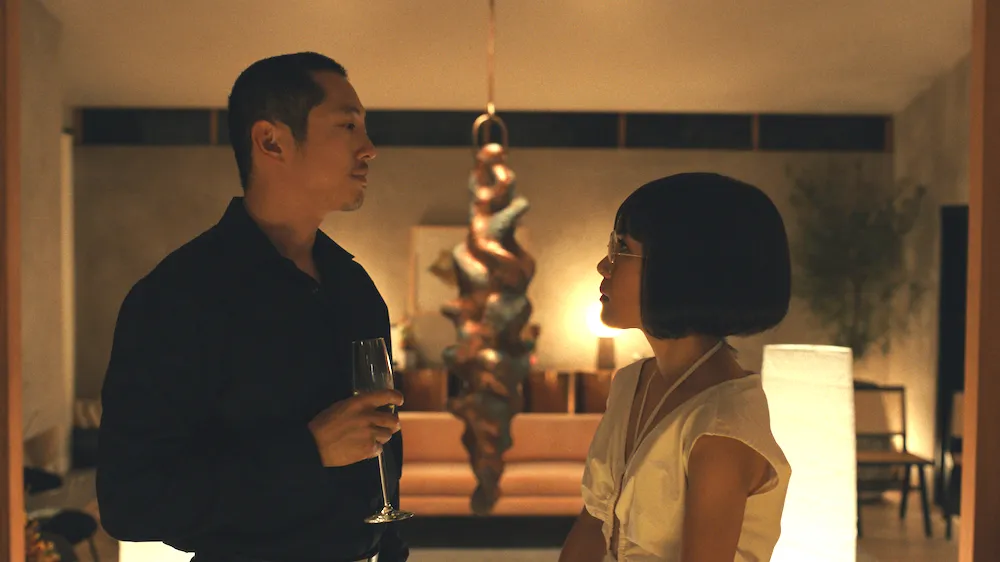
From the promotional binge that preceded the first season’s release, it was clear the story’s events would be fueled by a central conflict; thirty-something Danny Cho, played by Steven Yuen, is strung out on failure as a contractor trying to ramp up his dwindling prospects. (As we'll discover, he's a so-so craftsman.)
He’s about to exit a hardware store parking lot in his pick=up when he gets in a me-first confrontation with Ali Wong’s Amy. Words are shouted, horns honked, a digit is flipped. The mad chase that follows, with her swanky Mercedes outracing his battered truck, leaves him enraged but equipped with her license plate number,
Ten episodes later, with plenty of pain, wrath, scheming and sporadic violence, a resolution of sorts—actually of a very particular and promising sort—is reached.
Read on or defer, aware there may be a few light spoilers.
Much like that season, derived from Lin’s own lived moment of road rage, Season 2 as it dropped this April was sparked by plot notions that arose in real life when he chanced to hear neighbors squabbling with disturbing ferocity.
Whether to do anything about that, and just what to do if he did act, then spurred him to ask two different age groups—his own and the younger cohort he knew—and see if they held differing views.
Thus came a parade of story beats focusing on two couples. One is millennial—Oscar Isaac’s Josh and Carey Mulligan’s LIndsay—and a second pair Gen Z, Charles Melton’s Austin and Cailee Spaeny’s Ashley.
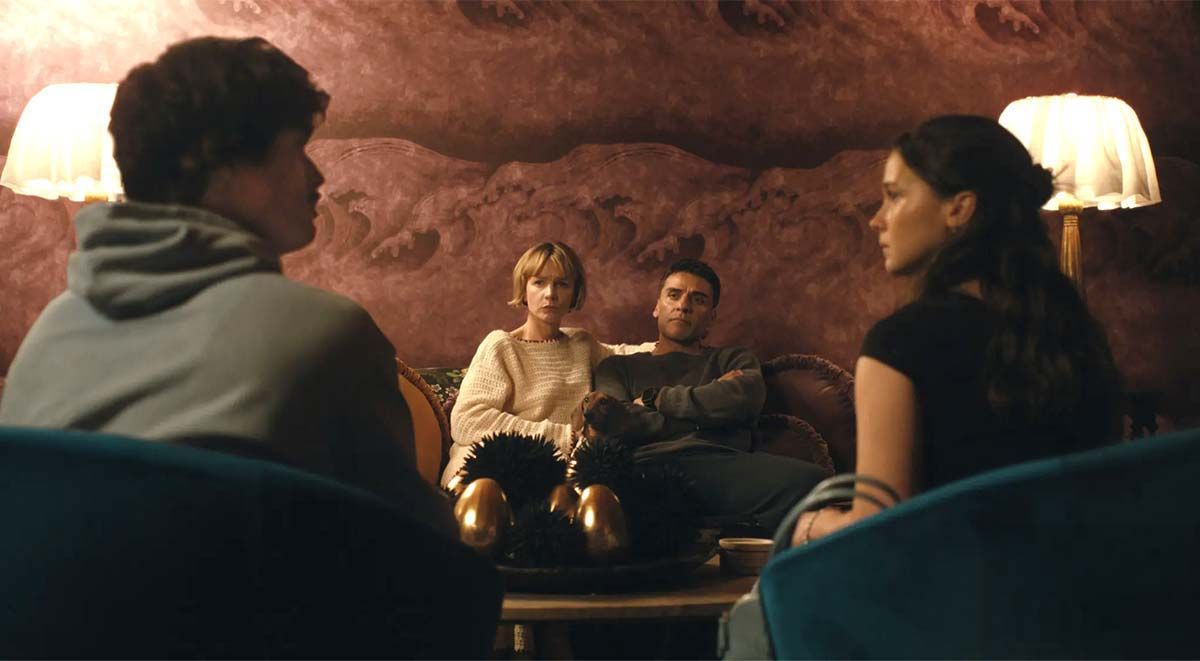
The scenes that spill out as we uneasily watch a revenge spiral comprise a rich l actors’ bakeoff. The older couple’s marriage is fracturing under money pressures and marital time served, with Isaac’s hyper-articulate eyebrows and Doberman-like fake grins drawing only a vivisecting stare from Mulligan’s who-farted mien and body language. (Lindsay, who’s feeling her age, gets the season’s mic drop when the conniving if studly club tennis pro offers to sign her on for the “40-and-over” group. She slops her drink on him and adds, stalking off, “I’m 39, you fuckwit!”)
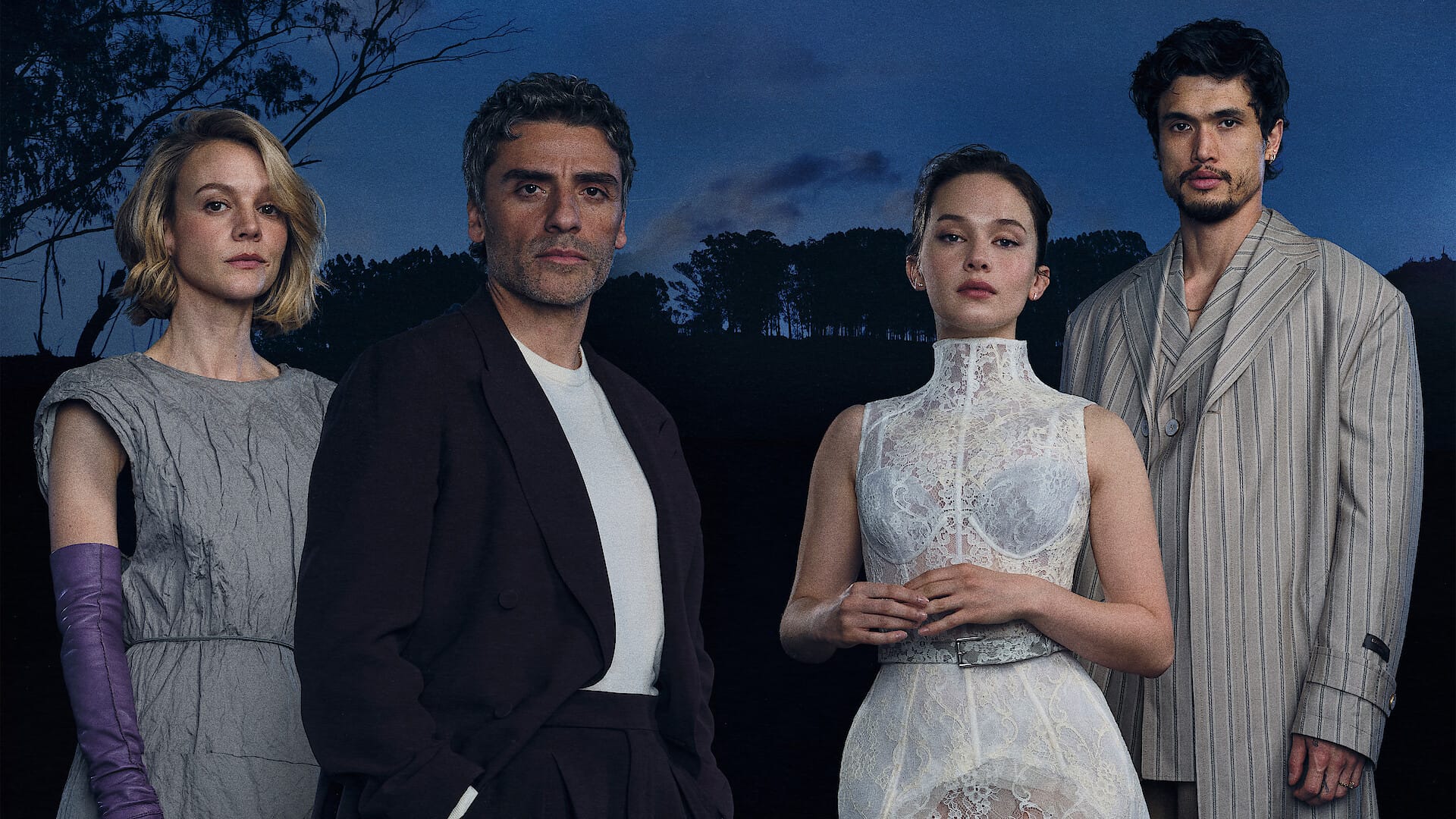
The ensemble work is exuberantly nasty, as the elder couple with their collapsing future maneuver for some advantage against the younger tag-team,. The latter are ickily watchable for Melton’s Austin with his school-of-Brando dimness and Spaeny’s takes of the obtuse (but scheming) Ashley's flinching phoniness.
The spiraling scams that pop up are centered on the quartet's jobs with a posh Montecito country club, with William Fichtner as Troy, the lupine emblem of overprivileged, cocksure oligarchy. The posh back drop means that the interactions summon up echoes of “White Lotus", Still, Lin and right-hand man Jake Schreier roll out their own breed of wealth signifiers, with class and ethnicity drawing out the principals’ casually sociopathic personality flaws.
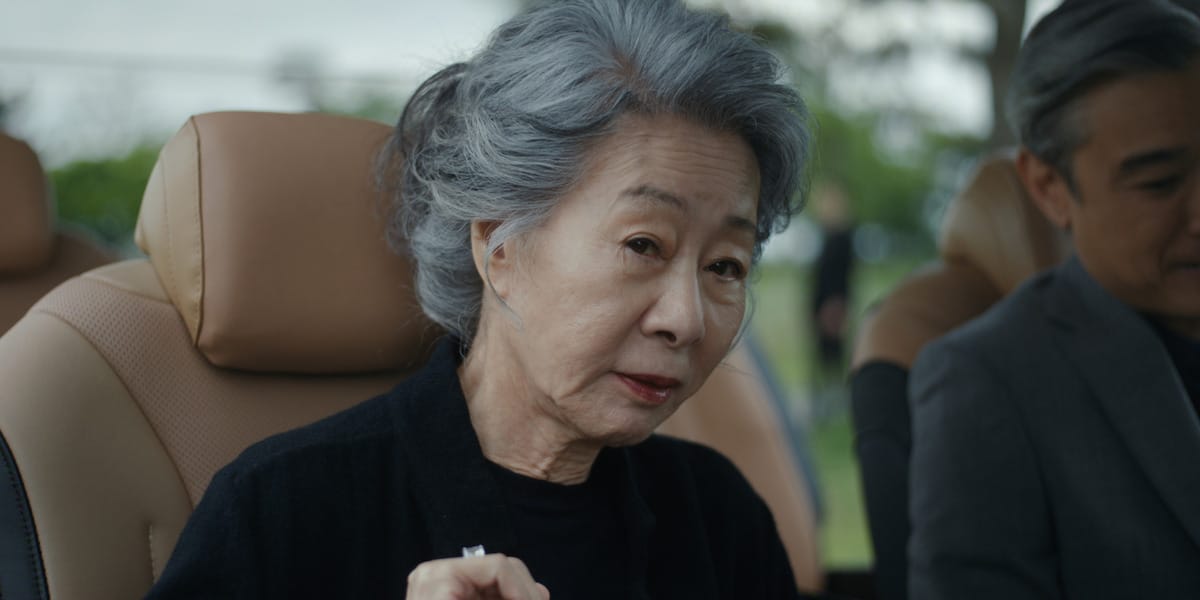
What gives Lin’s work more heft than that of Mike White is that the settings and threats are less louche, more painfully consequential. (Cf. “Margo Has Money Troubles” with its impecunious group). The quartet is foregrounded partly to set off plot developments requiring a passel of amusingly hapless would-be gangsters, some Korean (and who imagined a suburban Cali county could foster such a group?). This squad is more profane and dangerous than the oppressed local working class foils of White’s scenarios, but when the billionaire Seoul-based -conglomerate queen and country club owner Chairwoman Park ( Youn Yuh-jung), steps in, there may be blood. She is figuratively the season of winter, Lin has said in attributing life stages to his cast, and her chilly if remorseful aura makes that clue pay off more than Lin's former go-to symbols of crows (Season 1) and ants (Season 2).
Where critiques of empty family relations and the sting of arrant materialism lick at the edges of White’s scenarios, both seasons of “Beef” reflect deeper ground truths of America’s K-shaped economy today.
The dubiously happy Austin still cherishes his college football glory (he won the `Butkus trophy'-knowing, evocative name drop, Mr. Lin!) and issues his sophomoric takes with blank- self-assurance. (I always thought `libtard’ was an empty MAGA coinage until I watched Melton demonstrate it. ) As a screen presence he still carries the magnetism his showed as the "interloper" in 2023's May December). Pains are taken to show, often in flashbacks, the casual cruelties of the key characters' elders, Whether the previous generation was of high net worth and otherwise, their parenting failures helped create these greedy wretches.
It will be interesting, less for the significance of the award trophies than as a gauging of the national rich-people-suck mood, to see how Season 2 fares in the voting arena when the Emmy noms come out on July 8. Season 2, which offers eight episodes to the first season’s ten (though they also run longer this time), landed about ten points lower among critics than the first season's near-perfect scores, and this erving of "Beef" not be less of an early prohibitive favorite its predecessor was.
One wonders if the bleakness represented by feasible contenders like “DTF St. Louis”, “Half Man”, Lord of the Flies” and even the J.F.K. Jr./ Carolyn Bessette diss-fest “Love Story” will disappear in a shared fog bank of anomie and anhedonia, and that Season 2 of “Beef”, with its moments of grace and resolution, will win in a long run on the muddy track that is our national mood.
Those potential competitors each have their real-life resonances –the intrusion of the internet into a thirst-trapped sexual desperation in “DTF St. Louis”, an even more confused grasping for identifying “Half Man:, the demonic apocalypse of human nature in actual nature in “Lord of the Flies”, the ruinations of a life lived in public in “Love Story”. It’s worth cataloguing those if only to set them against “Beef”, which, as the show’s critical stature indicates, has now notched two seasons unveiling Lin’s abiding focus on deep concerns that have to be called spiritual.
Lin, though proudly Korean if ambivalent about what it means for him and his cohort to be Korean-American, has used deep art direction and elaborate settings to fix his vivid and fertile visual sense on Asian concerns of karma and reincarnation—collectively, samara, the cycle of life and pain. A specialty is 16th Century paintings that lean into grotesqueries.)
You could even say he stands among us, less and less a stranger, as an example for assimilation and reconciliation that aour current hate-ridden administration would reject (save for the billionaires, of course).
He’s spoken about making an attempt on his own life when he was 32, not only in some detail to the New Yorker but also while spotlighted collecting a trophy in the Emmy sweep: “A lot of suicidal ideation on this show was based on stuff that I and the folks up here have struggled with over the years. I’m grateful and humbled by everyone who watched the show and reached out about their own personal struggles. That’s very life-affirming, so thank you.”
In Season 1, as expertly portrayed by Yuen, Danny Cho is in his 30s and suffering with mood disorders, as was Lin at a similar stage in life. Having survived, thrived, and even triumphed, Lin seems as much an approachable Everyman as a recently enthroned king of streaming content could be. He dishes out credit to his team—notably colleague Schreier his fellow writers– and his entire gaggle of creative right-hands. He seems to question his own ascension when he drops quotes about life’s inevitable course with lines like, “You end up becoming the thing that you never thought you would be.”
In his ongoing search to perhaps discover what Danny Cho at one point says-“Why can’t we be happy?” Lin demonstrates his knack has a knack for aphorism. And although not all of his sidelong episode titles fully land as insights into his themes, others amplify his messages.
One for example, is from the first of all 18 episodes: “All the Things We're Never Going to Have"; another from Sylvia Plath truncates some lines sthe pot, who died by suicide: I am inhabited by a cry. Nightly it flaps out. Looking, with its hooks, for something to love.”
There's a humbler poetry to the legendary, formerly deep cut Smashing Pumpkins song "Mayonnise" (Billy Corgan's spelling) that plays under the first season's image of deep acceptance.
Season 2 has its own reconciliations to show. As Lin agreed with one of his actors, the resolution of that latter moment comes "at the moment where you sacrifice yourself, unbeknownst to the person you’re saving."
Ultimately, late in the entire run of events, the billionaire matriarch of Season 2 has lured and/or kidnapped the now full-on-lunatic troupe all the way to Seoul for the banger of a concluding episode. It draws its title almost as a call back the way we’ve heard her compare civilization’s remorseless class system to the laws of nature. It’s a forlorn if unapologetic message that emerges as a farewell and a warning: "It Will Stay This Way and You Will Obey"
#
Comments ()